woensdag, augustus 24, 2022

SOURCE: "Far from likely to die soon" (Waldegrave to the Duke of Newcastle, Paris, 16 May 1738)

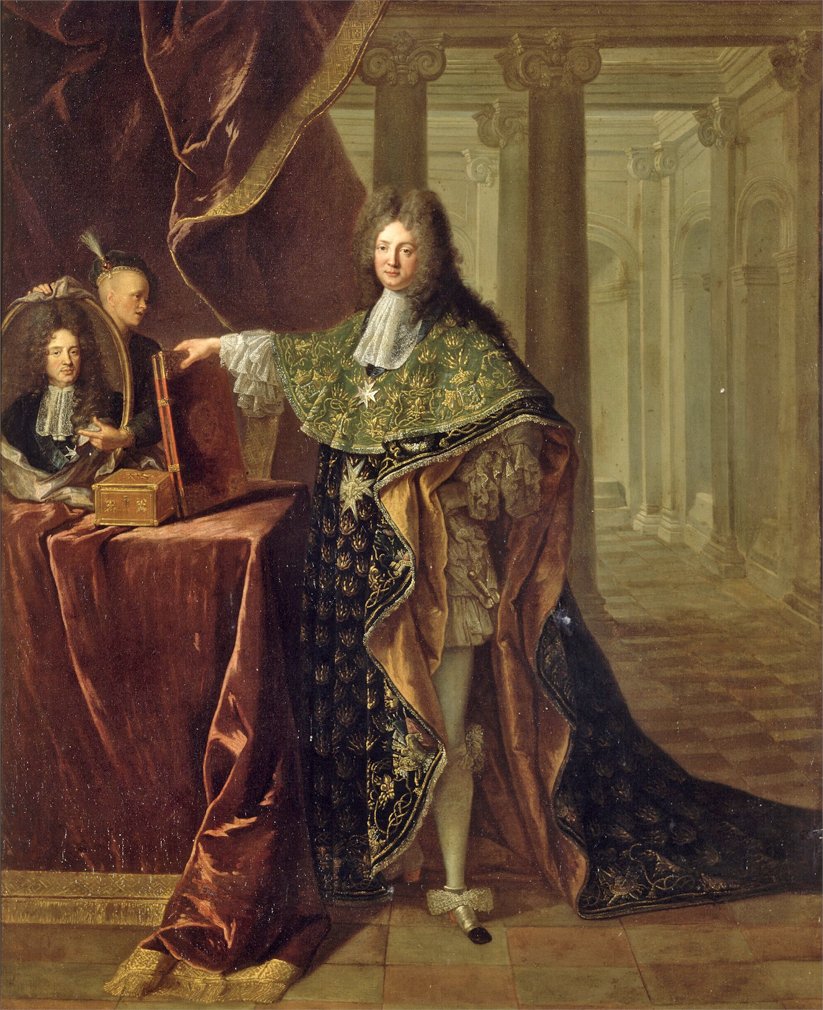
(image: Cardinal Fleury portrayed by Hyacinthe Rigaud (1728, fragment); source: Wikimedia Commons)

As the moments of relative calm are scarce, I hope the reader of the present blog can forgive me for adding a small transcription "vieux style" (à la main) to the existing small stock. This short letter (ff. 18r°-19v°) is written in Paris and dated (Friday) 16 May 1738 N.S. George II's ambassador extraordinary and minister plenipotentiary, James 1st Earl of Waldegrave, descibes the situation at court. Britain had earlier spent the War of the Polish Succession (1733-1735/1738) as a neutral power, whereas France had allied itself with Spain and Savoy-Sardinia against the House of Austria and most of the German princes. Waldegrave is one of the most prominent British diplomats of the age: he spent two years at Charles VI's court in Vienna (1728-1730) before moving for a ten year-period to Paris, where the British ambassador could at times be seen as a "secretary of state in residence". 

Britain (and the Dutch Republic) failed to insert themselves as mediators in the negotiations that pacified the conflict (cf. abdication of Francis Stephen (husband of Archduchess Maria Theresia) as Duke of Lorraine, replacement by Stanislas Leczszynski, Louis XV's father-in-law, in return for this renunciation to the throne of Poland; recognition of Augustus the Strong's son as King of Poland, and of Francis Stephen as Grand Duke of Tuscany; recognition of Charles of Spain as King of Naples and Sicily). France recognised Emperor Charles VI's "Pragmatic Sanction", or constitutional settlement allowing his daughters to succeed him in the Habsburg hereditary lands, bypassing the daughters of his elder brother, the late Emperor Joseph I.

(image: James 1st Earl Waldegrave, by Gustav Lundberg, 1738-1740; Source: National Portrait Gallery)

Fleury's secrétaire d'Etat des Affaires Étrangères, Germain-Louis Chauvelin, who had pleaded for war in the German Space, had resigned in 1737. The Cardinal himself had always cultivated a cordial relationship with Britain. Consequently, Waldegrave hoped to renew the Franco-British treaty of alliance which James Stanhope and Guillaume Dubois had initiated late in 1716. Britain and France continued to be rivals on the imperial or global stage, but had managed their mutual rivalries on the ground overseas after the Peace of Utrecht (cf. John Shovlin's recent study on the matter, or my micro-study on French merchants' complaints in the Mediterranean). In Waldegrave's letter, neither the Prime Minister, nor the ministers competent for the French maritime empire (incl. colonies) and Foreign Affairs seemed to have time for him.

Waldegrave's mission was of course further complicated by Old Regime court politics, masterfully described by Peter Campbell in his work on Fleury. The cardinal, born in 1653, was already well over eighty. The question of longevity and physical ability logically arises. Managing the ship of state in a frenzied court is never evident. As Louis XV (born in 1710), who confided in and trusted the Cardinal (his erstwhile preceptor) grew older, it was to be supposed that martial vigour and personal ambition would inspire the Cardinal's rivals to hijack his moderate and prudent modus operandi (descibed for instance in my article on the Congress of Soissons, which can be read in open access here).

The letter below is a beaufitul example of the itinerant nature of the French court, well after the completion of Versailles in the 1680s. Louis XV's geography of curial power extends to Rambouillet (where he attends the Countess of Toulouse, see below; used by several French presidents to receive hosts) and Compiègne (cf. July (f. 18v°), the later residence of Napoleon III, in the vincinity of Soissons) or Fontainebleau (where Louis XIV equally spent time in Summer). Information is never sure, and hints of division, or of a weakening position of the Cardinal-Prime Minister, are of course prominent (e.g. f. 18v°: it is said that Louis XV imposed his will on the Cardinal: the court will go to Rambouillet).

Rambouillet is immediately tied (ibid.) to the Count of Toulouse, Louis XIV's natural son with Madame de Montespan. Toulouse, amiral de France (and thus a very wealthy man) died on 31 December 1737 in this castle. His widow, the nearly 50 year-old Marie Victoire de Noailles, belongs to the (prominent) Noailles family, which is loathed by Waldegrave's source, 'who knows the interiour of the Court'. Waldegrave implicitly suggests that his source uses Fleury as a strawman to highlight the pernicious nature of the Noailles family. 

(image: Marie Victoire de Noailles, comtesse de Toulouse, d'après Coypel; source: Pop (Ministère de la Culture)

After describing court gossip, Waldegrave turns to another aspect of palatial geography: Louis XV had just been to Marly, which Louis XIV had created to isolate himself even further with selected company than in the Grand Trianon. Waldegrave remarks that Foreign Minsiters do not see the King (f. 19r°). On return from marly, Louis XIV's great-grandson took care to receive Waldegrave exceeding civilly, taking quite some time for conversation with his Brittanick (and Hanoverian) Majesty. He states that the King (who had slimmed down and spoke with a stronger voice) was far from being likely to die soon of a consumption.

56 years separated the King from his former teacher. Fleury, as Waldegrave testified, suffered 'a small fainting fit', transformed into a decisvely life-threatening event by capital gossip. When the ambassador showed up at the Cardinal's lodgings to verify this... 'he seemed as hearty as in my preceding visits.' The next attack would 'carry him off', or... 'perhaps not the hundreth'. 

André-Hercule de Fleury would live for another four years and almost nine months, and reach the age of 89.   

My Lord

The same reason, that M. de Maurepas [Secrétaire d'État de la Marine]
gives for his not proceeding upon our American
affairs, is given me likewise by M. Amelot [Secrétaire d'État des Affaires Étrangères] for
his having done nothing in consequence of our
Counter Project for the Deffensive Alliance. I fancy
by what I just hear, of His Most Christian
Majesty's going next Sunday
[18 May] to Rambouillet for
three days
 [21 May], That the Cardinal will come then to
Issy, and that I shall have a Conference there
with him and M. Amelot on this subject. When
I asked the Cardinal last Tuesday
[12 May], if he had yet
considered our Counter Project, he said he had
not had time, that he was hurried by every body to
death, but he hoped in the following week to have
two or three days to himself, and then he would
work upon it. He neither said where, nor how
which I took notice of at the time, and attributed

[v°]

his indecision to the State he was in; but I am
now told, that this journey to Rambouillet (which
is to be followed by three or four more before that
to Compiegne, where the French king removes the
Beginning of July) hurts the Cardinal, and has been
strenuously opposed by him. It is however carried
against him, or at least he has been brought to
consent to it. The Person I have this from,
knows the interior of the Court, as well as any
Man in France, he hates the Noailles cordially,
and fears that Madame de Toulouse will get
ground on this occasion; for certain it is, that
hitherto the journeys to Rambouillet were
attributed to the French King's personal
Friendship for Count de Toulouse; but from its extending
in so publick a manner to his widow, who is
known to be a very intriguing woman, of an
intriguing family, and as she will undoubtedly
take care to have such company with her as will
make the French King's stay there agreable to
him, it is taken for granted, that she has schemes

[r°]

ready made in favour of her Family, and to
the Cardinal's Prejudice. Endless Conjectures
are drawn from these appearances, which time
alone will make out.

As to other matters here, I do not see
any reason to alter my mind since my last,
excepting in the French King's Person. The
Court having been at Marly, where Foreign
Ministers do not see him, last Tuesday
[13 May] was
the first time I had an opportunity of paying
my Court to His Most Christian Majesty since
my arrival here
; He received me exceeding
civilly, and talked to me a good deal. It is
true he is pretty much taken away; but really had
I not expected it, and had I not known him
fatter some time ago, I should not have taken
much notice of his leanness; for his complexion
was clearer, his Eyes more lively, and his Voice
much stronger, than I have observed this great
while. In fine, in my opinion, bhe is far from being
likely to die soon of a consumption, as the generality

[v°]

here will have it.

The Cardinal hd a small fainting fit
on Monday Morning
[12 May], which occasioned a Report
in Paris, that he was dying; but I was at his 
lodgings the next Morning
[13 May] by half an hour
after eight, and found he was gone to Mass. At
his return before nine I had my audience of
him, and he seemed as hearty as in my
preceding visits. One of those Fits will probably
carry him off; perhaps the first, and perhaps
not the Hundreth.

I am with the greatest Respect

Mylord

Yr graces most
humble and most
obedient servant

Waldegrave

Source: The National Archives (Kew), State Papers Foreign, 78 (France), vol. 218. 

dinsdag, augustus 23, 2022

BOOK REVIEW on Orazio CONDORELLI, Franck ROUMY & Mathias SCHMOECKEL (Hsrg.), Der Einfluss der Kanonistik auf die europäische Rechtskultur, Bd. 6: Völkerrecht (Zeitschrift der Savigny-Stiftung für Rechtsgeschichte - Kanonistische Abteilung, Vol. CVIII (2022), pp. 367-374)


(image source: De Gruyter)

I wrote a review for the Zeitschrift der Savigny-Stiftung für Rechtsgeschichte - Kanonistische Abteilung on the 6th volume of the series Der Einfluss der Kanonistik auf die europäische Rechtskultur.

First sentences:

The series „Einfluss der Kanonistik auf die europäische Rechtskultur“, of which the present volume is the sixth and final, aims to demonstrate how canon law (and theology) have influenced not only norms and rules, but also the legal culture of practitioners and theorists of law in Europe. Nearly all manuals of the history of international law devote considerable attention to the contribution of theology to the jus ad bellum, but this approach is mostly constructed outside-in.

Read the review here (DOI 10.1515/zrgk-2022-0026).

donderdag, juni 30, 2022

ARTICLE: “John Gilissen and the Teaching of Legal History in Brussels” [Teaching Legal History – History of Legal Teaching, ed. Łukasz Jan KORPOROWICZ] (Acta Universitatis Lodziensis. Folia Iuridica 99 (2022), 19-50) (OPEN ACCESS)


(Image source: Uni Lodz)

Abstract:

John Gilissen (1912–1988) was a high-profile legal academic at the Université libre de Bruxelles (°1834) and the Vrije Universiteit Brussel (°1969). Personal – albeit fragmentary – archival records deposited with these universities permit to reconstruct his teaching (both ex cathedra-courses for big groups and intensive tutorials), impressive global scientific network and insatiable scientific curiosity. Gilissen is the author of standard works on many aspects of domestic legal history (both public and private), and acquired renown as the secretary-general of the Société Jean Bodin pour l’histoire comparative des institutions. His influential position as a public prosecutor, law professor and legal historian generates a unique insider’s perspective on the confessional, linguistic and constitutional transformation of the country from World War One to the First Reform of the State. The current law curriculum at the Vrije Universiteit Brussel still bears marks of Gilissen’s comparative approach to the history of civil law and his interest in the contemporary relevance of institutional history.

Read more here (DOI 10.18778/0208-6069.99.03).


maandag, juni 27, 2022

CONFERENCE PAPER: "Trade and Empire at the Congress of Soissons (1728-1730)" [Panel Non-legal professions and legal discourse on trade and empire] (6th Biennial Conference of the European Society for Comparative Legal History (Lissabon: Universidade da Lisboa, 23 JUN 2022))


(image: Lisbon School of Law; source: ESCLH Blog)

Last week on Thursday, I presented an aspect of my recent longer article on the Congress of Soissons (see SSRN) at the 6th Biennial Conference of the European Society for Comparative Legal History, organised by Prof. Pedro Barbas Homem and dr. Ana Isabel Barcelo Caldeira Fouto of the Universidade da Lisboa. The paper was part of Panel 16 ("Non-Legal Professions and Legal Discourse on Trade and Empire"), with contributions by drs. Florenz Volkaert (UGent/FWO) and dr. Inge Van Hulle (MPILHLT, Frankfurt am Main).

All abstracts and speaker cvs can be downloaded for free in the abstracts book.

dinsdag, juni 21, 2022

maandag, juni 20, 2022

COMMENTAAR: de Tijd over "zwarte zondag" in Frankrijk (20 JUN 2022)

 Ik schreef een stukje voor de Tijd over de "Zwarte Zondag". Zie hier.

INTERVIEW: institutionele mogelijkheden na de verkiezingen voor de Assemblée Nationale (VRT NWS, 20 JUN 2022)

Gianni Paelinck (VRT NWS) interviewde me over de institutionele mogelijkheden na de verkiezingen van de Assemblée Nationale gisteren.

Lees verder hier.

INTERVIEW: Slotaflevering expertpanel Frankrijk (de Volkskrant, 20 JUN 2022)

 Vandaag verscheen op de site van de Volkskrant (morgen gedrukt) de laatste afleving van het expertpanel over Frankrijk, n.a.v. de wetgevende verkiezingen van gisteren en vorige week.

Lees meer hier.

ARTICLE: “ Bringing the divided Powers of Europe nearer one another: The Congress of Soissons, 1728-1730” (Nuova Antologia Militare III (2022), pp. 535-642)


Abstract:

This contribution reconstructs the Congress of Soissons (1728-1730), a consequence of the Parisian Preliminaries (31 May 1727), an agreement that prevented the eruption of a general war in Europe between the League of Hanover (France, Britain-Hanover, Dutch Republic) and the League of Vienna (Emperor, Spain, Brandenburg-Prussia). The ‘sleeping’ congress did not generate a final peace agreement. Soissons was a congress of peacekeeping (Burkhardt), and in part contributed to the European culture of peace engineering (Ghervas). Besides the central commercial claims that opposed the Maritime Powers to Spain, the delegations reflected on geopolitical questions from the East Indies to Scandinavia, the Baltic and the Mediterranean. They were solicited by multiple actors of the European Society of Princes (Bély), down to the level of private individuals, who hoped for diplomatic intercession. France’s position as equidistant director of various bilateral and collective talks becomes clear through the itineraries of the delegates between Soissons, Fontainebleau, Compiègne and Versailles. The sociability of the congress is not purely curial or Parisian, but also includes life on the countryside. French archives highlight the material and logistical challenges of turning a regional hub as Soissons into an international one. The Hop Archives, which contain a synthesis of the daily reports of the Dutch delegation, and the British diplomatic archives (State Papers Foreign) are complemented by the press and the letters of George Lyttelton, who spent several months in Soissons on his Grand Tour. Not only this public circulation of news on the congress, but also the material culture of the print resources consulted by the diplomats allow to identify this eighteenth-century meeting place within the broader European republic of books, news and letters.

Download the full version here or on SSRN. 

vrijdag, juni 17, 2022

BOOK REVIEW: Review of Gabriela Frei, Great Britain, International Law and the Evolution of Maritime Strategic Thought, 1856-1914. Oxford: Oxford university Press, 2020 (Journal of the History of International Law/Revue d'histoire du droit international XXIV (2022), No. 2, pp. 292-297)

I wrote a review of Gabriela Frei's monograph on Great Britain, International Law and the Evolution of Maritime Strategic Thought (Oxford Historical Monographs, 2020) for the Journal of the History of International Law/Revue d'histoire du droit international.

The text can be read on Brill's site (DOI 10.1163/15718050-12340205).

woensdag, mei 04, 2022

CHAPTER: "Il n'y a que le provisoire qui dure: early eighteenth-century preliminary articles and conventions in doctrine and practice", in: Simona TAROZZI & Elisabetta FIOCCH MALASPINA (eds.), From International Treaties to the Binding Nature of Contract. A Historical and Comparative Analysis, [Collana Ravenna Capitale] (Santarcangelo di Romagna: Maggioli Editore, 2022), pp. 35-50, ISBN 9788891658470


(image source: Mondadori)

I contributed a chapter on "early eighteenth-century preliminary articles and conventions in doctrine and practice" in a new collective volume, From International Treaties to the Binding Nature of Contract. A Historical and Comparative Study, edited by Simona Tarozzi (Bologna) and Elisabetta Fiocchi Malaspina (Zurich).

More information here. See also Google Books.

Update 23 V 2025: this publication is presently available in open access (here).

dinsdag, mei 03, 2022

OVR-Wisselleerstoel 2020-2021 (Mei 2022)


De stichting OVR (Stichting tot Uitgaaf der Bronnen van het Oud-Vaderlandse Recht) verleende me de eer om als gasthoogleraar de maand mei door te brengen aan de Vrije Universiteit Amsterdam, op uitnodiging van collega proximus Prof. Hylkje De Jong. In het kader van deze tweejaarlijkse leerstoel (die omwille van de pandemie verschoven werd naar dit academiejaar) kunnen de rechtenfaculteiten in de Noordelijke en Zuidelijke Nederlanden een rechtshistoricus van de overzijde uitnodigen, om via vijftien uur colleges, oefeningen en lezingen de onderlinge banden aan te halen en te interageren met de plaatselijke universitaire gemeenschap.


Conform het reglement van de leerstoel gaat op woensdag 18 mei in de namiddag een publieke lezing met receptie door, met als titel “Hoe modern was het negentiende-eeuwse neutraliteitsrecht ?”. 


Een volledige activiteitenlijst voor de leerstoel kan gevonden hier gevonden worden.

zondag, mei 01, 2022

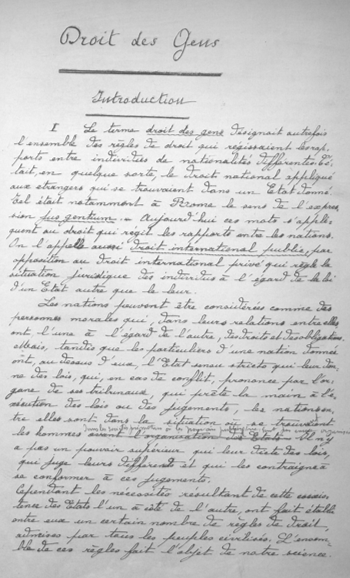
OPEN SOURCE LAUNCH: L. Arendt's course on the law of nations in King Leopold's Foreign Office (2 MAY 2022, 17:00, MS Teams/Hybrid)


(image source: Belgian State Archives, all rights reserved)

This event is a presentation of 175 pages of manuscript course notes on the law of nations (Le droit des gens) linked to a course taught at the Belgian Ministry of Foreign Affairs in the Belle Époque, retrieved in Louis (Léon) Arendt's private papers in the Belgian State Archives (Fund BE-A0510.320). The inventory can be consulted on the State Archives' website.

Edouard Louis Léon Marie Arendt (1843-1924) was the director-general of political affairs (1886) in the Belgian Foreign Office in the heyday of King Leopold II's reign. He entered the Ministry as 'attaché' in 1870. Belgium's security on the European continent, and of course the affairs of the Congo Free State were the dominant themes of his time in office as a civil servant (1870-1912).

Biographical details can be found in the entry by Jacques Willequet in the Biographie nationale de Belgique. His father, Academy member and Professor at the Catholic University of Leuven Wilhelm Arendt (1808-1865) authored a seminal treatise on Belgian permanent neutrality in 1845. The text can be consulted on Google Books.

Louis Arendt authored 'hundreds' of legal memoranda elaborating the theory and practice of Belgian permanent neutrality. For an introduction to the topic. Henri Haag devoted a lenghthy article to Arendt's memorandum written in 1911 and its use on the eve of World War One (Bulletin of the Royal Commission for History, open access on Persée).

Arendt provided a hand-written 'Préface' on the left-hand side of the first page, stating:

Jusqu'à la page 82 (lois de la guerre) ce cours a été copié, sous révision préalable, sur un cahier déjà ancien d'un élève peu rigoureux. D'où des fautes, des vieilleries, des phrases incorrectes. La suite elle-même n'a subi aucune correction, mais a été donnée à mes chers élèves. 3 septembre 1904. Tiré à 9 exemplaires.

The purpose of this OSF-site is not to provide a full-fledged analysis of Arendt's treatise. That is the subject of research articles and chapters. The current wiki shares the text in a transcription as it can be found in the State Archives. We did not interpolate (i.e. errors in the text are indicated with [sic]), since most the French grammar and vocabulary used in 1904 largely conforms to what we use nowadays.

My oral contribution at the conference "Law(s) and International Relations", held in Orléans (15-17 Sept 2021) can provide a glimpse of the richness of this source.

This event is hybrid: participants can either go physically to the Faculty of Law's Council Room, or register for the Teams-event here. 

The fully transcribed source can be consulted on the Open Science Foundation's website: DOI 10.17605/OSF.IO/E7HXS.
 

woensdag, april 27, 2022

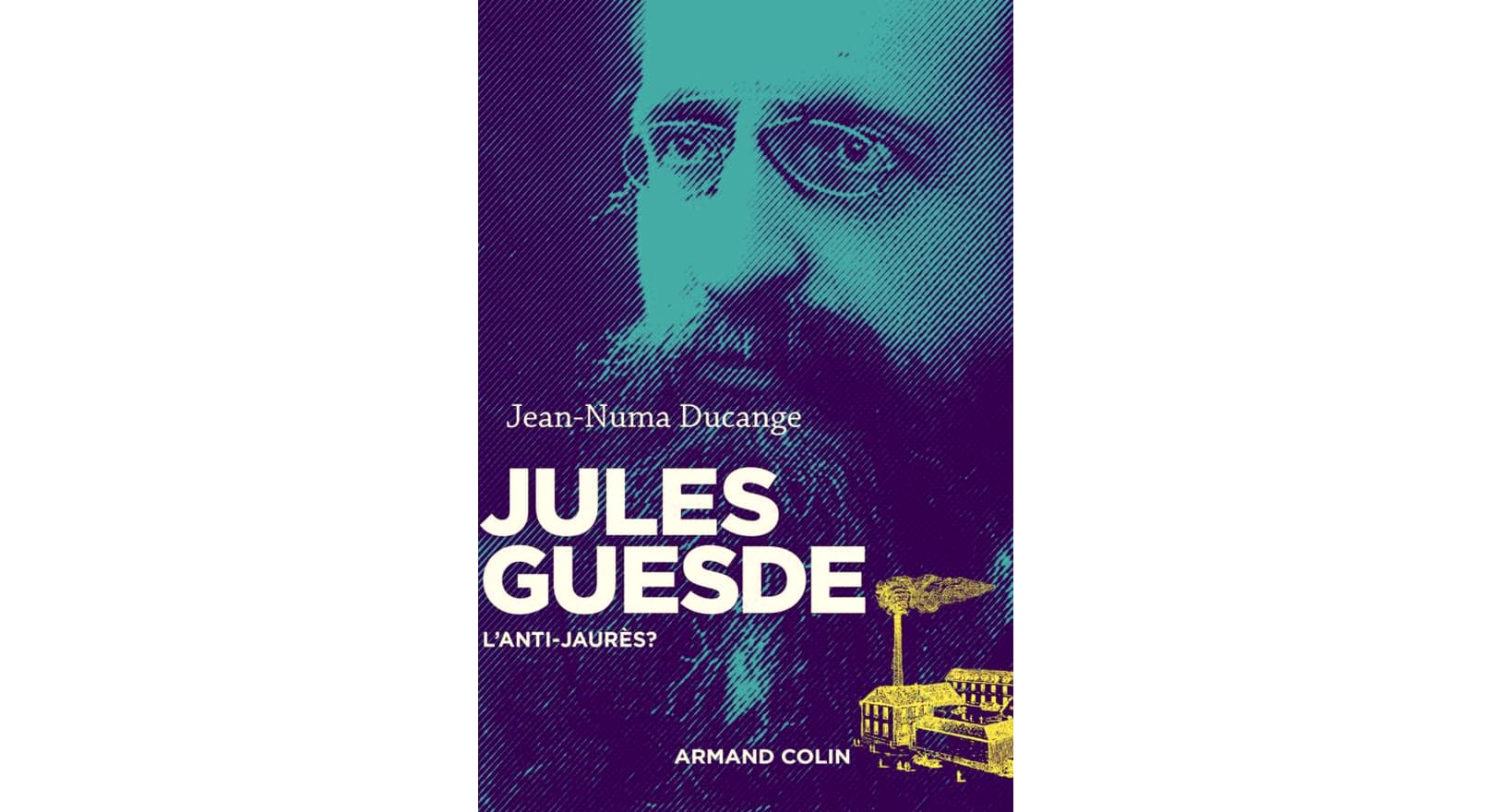
BOEKBESPREKING: Jean-Numa DUCANGE, Jules Guesde, l'anti-Jaurès ? (SamPol Blog, 27 APR 2022)


(bron afbeelding: SamPol)

Ik besprak voor de blog van SamPol de biografie van Jules Guesde door Jean-Numa Ducange, die in 2017 verscheen.

Meer informatie hier.

maandag, april 25, 2022

VIDEO: de Afspraak (25 APR 2022)

Ik was te gast bij de Afspraak voor een gesprek over de Franse presidentsverkiezingen met Phara de Aguirre en Mia Doornaert.

De uitzending kan hier worden herbekeken.

OPINIE: "Fransen hebben koopkracht niet begraven" (de Tijd, 25 APR 2022)

 Ik schreef een opiniebijdrage voor de Tijd over de tweede ronde, na een eerste over de eerste ronde van de présidentielles.

Lees meer hier.

INTERVIEW: Nieuwe Feiten (Radio 1, 25 APR 2022)

 Vanmiddag was ik te gast op Nieuwe Feiten (Radio 1) bij Lieven Vandenhaute.

Te herbeluisteren hier (rond 23:39).

INTERVIEW: De Morgen (25 APR 2022)

 Maarten Rabaey (De Morgen) interviewde me op 24 april 's avonds over de Franse persidentsverkiezingen.

Meer hier.

VIDEO: VRT NWS Live over de Franse Verkiezingen (VRT NWS 25 APR 2022)

 Ik was vanochtend te gast op de VRT in Brussel voor een VRT NWS live met Stef Meerbergen en Steven Decraene (vanuit Parijs) over de Franse presidentsverkiezingen.

Meer informatie hier.

OPINIE: "Nee, de linkse kiezer is niet massaal thuis gebleven" (De Morgen, 25 APR 2022)

 Ik schreef een stukje in De Morgen. Meer informatie hier.

donderdag, april 21, 2022

vrijdag, april 15, 2022

LEZING: "Historische configuraties van Kerk en Staat sinds de Verlichting" [Réflexions autour de la laïcité] - Reflecties over laïciteit, Brussel: Grondwettelijk Hof, 22 APR 2022)

 
(image source: Twitter)

Op vrijdag 22 april nam ik deel aan de studiedag ter gelegenheid van het emeritaat van voorzitter van het Grondwettelijk Hof  Daoût rond de Laïcité (de "neutraliteit van de overheid", of de "scheiding tussen Kerk en Staat") en de vele verschillen tussen dit heel Franse concept en de regeling in België. 

Een programma kan hier worden gevonden. De acta worden later door Anthémis en die Keure uitgegeven.

dinsdag, april 12, 2022

zondag, april 10, 2022

INTERVIEW: de Zondag (10 april 2022)


(bron: de Zondag)

Ik werd geïnterviewd door Vincent Vanhoorne (de Zondag) over de Franse presidentsverkiezingen.

Lees meer hier.

donderdag, april 07, 2022

INTERVIEW: Portret Macron (Knack, 6 APR 2022)

Eri Raspoet (Knack) interviewde me in het kader van een portret van de Franse president voor de verkiezingen.

Meer informatie hier.

vrijdag, april 01, 2022

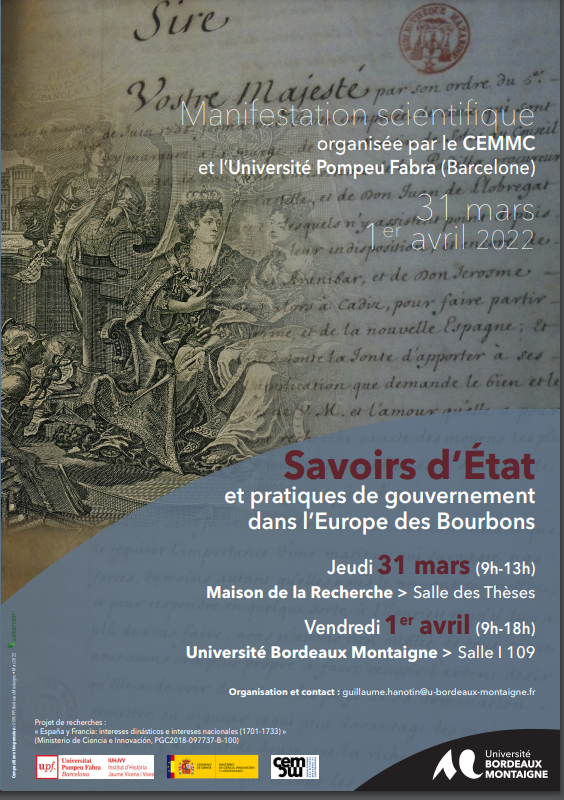
CONFERENCE PAPER: "Les imaginaires juridiques de Philippe V au Congrès de Soissons (1728-1730): souveraineté ou intérêt commercial ?" [Colloque Savoirs d'État et pratiques de gouvernement dans l'Europe des Bourbons] (Bordeaux: Université Bordeaux-Montaigne, 31 MAR-1 APR 2022)

(image source: Twitter)

I had the honour to speak at the conference Savoirs d'État et pratiques de gouvernement dans l'Europe des Bourbons, organised by the universities of Bordeaux-Montaigne (G. Hanotin) and Pompeu Fabra Barcelona (J. Albareda) on 31 March and 1 April.

Programme here.

maandag, maart 14, 2022

vrijdag, maart 11, 2022

INTERVIEW: Over Versailles als diplomatiek kruispunt (Radio 1, De Wereld Vandaag)

(afbeelding: Jean-Baptiste Colbert de Torcy, secrétaire d'état des affaires étrangères op het einde van Lodewijk XIV's regeerperiode; bron: Wikimedia Commons)

Gisteren was ik te gast bij De Wereld Vandaag (Ruth Roets) over Versailles als diplomatiek kruispunt, gelet op de informele Europese top die er plaatsgrijpt.

Het interview kan hier worden herbeluisterd.

donderdag, maart 10, 2022

ARTICLE: "Le théâtre de la guerre et la bataille d’Audenarde (11 juillet 1708)" [Actes des Journées Internationales d'histoire du droit et des institutions 2019, Société d'histoire du droit et des institutions des pays flamands, picards et wallons] (C@hiers du CRHiDI 43 (2021)) [OPEN ACCESS]


(image source: POPUPS)

Abstract:

The battle of Oudenarde (11 July 1708) is one of the numerous defeats of the end of Louis XIV’s reign. The event seems disconnected from legal history. Yet, several layers of analysis allow to connect the battle to the constitutional systems of the belligerents, as well as to the law of nations. This article treats first the military confrontation of two mass armies, representing rulers from Granada to Königsberg, and the local perception of this sudden foreign military presence, through a satire on ‘French vanity and consternation’. In an ensuing stage, the German allies of Louis XIV and his opponents offer a perspective on the law of the Holy Roman Empire. Finally, the battle in itself being far from decisive, diplomatic manoeuvres announced the blueprint of the agreement that would bring the war to an end in 1713-1714. The interconnectedness of all ‘Theatres of War’ (Italy, Spain, Germany, Low Countries, Scotland) equally transpires in the iconography used in Schenk’s Schouwburg van den Oorlog.

Read the article in open access (DOI 10.25518/1370-2262.1360).

maandag, maart 07, 2022

EUTOPIA: Student reports Connected Learning Community Legal History: Minority Rights on Peak Event (CY Paris, 18-19 FEB 2022)


The students of the EUTopia Connected Learning Community Legal History:Minority Rights will report on the Peak Event where lecturers and students from the five partner institutions (UPF Barcelona, CY Paris, Ljubljana, VUB and Warwick) gathered physically on 18 and 19 February. 

Read more on the EUTopia CoLeCo Legal History:Minority Rights blog. 

maandag, februari 21, 2022

OUVRAGE: Raphaël CAHEN, Jérôme DE BROUWER, Frederik DHONDT & Maxime JOTTRAND (dir.), Les professeurs allemands. Circulation des savoirs juridiques et enseignement du droit (1817-1914) [Standen & Landen/Anciens Pays et Assemblées d'États, vol. 114] (Brussel: ASP, 2022), 176 p. ISBN 9789461172983, € 46


(image source: twitter)

Résumé:

Cet ouvrage collectif résulte d’une coopération entre historiens, philosophes et juristes belges, français et allemands menée à l’occasion d’une journée d’études organisé par le centre de recherches Contextual Research in Law de la Vrije Universiteit Brussel et le Centre d’Histoire du Droit et d’Anthropologie Juridique de l’Université Libre de Bruxelles. Il vise à combler un vide historiographique relatif à l’étude du phénomène de la migration des professeurs allemands de droit dans les universités belges au XIXème siècle. Il apporte également un éclairage sur les circulations des savoirs juridiques ainsi que sur l’enseignement du droit dans une perspective transnationale et comparatiste. Il présente à la fois quelques figures typiques (Warnkönig, Ahrens) de la circulation académique, mais aussi l’importance des séjours d’études dans la formation des juristes. Il livre une réflexion plus large sur les circulations transnationales à travers les époques en matière d’enseignement du droit ainsi que sur le recrutement des professeurs étrangers tant en Belgique qu’en Europe, avec des incidences sur le monde entier dans le contexte impérial et colonial. Avec les contributions de Raphaël Cahen, Jérôme De Brouwer, Pieter Dhondt, Wolfgang Forster, Jean-Louis Halpérin, Maxime Jottrand et Christoph-Eric Mecke.

 Sur les directeurs de la publication/les contributeurs:

Raphaël Cahen (1982) est juriste et historien. Il est chercheur postdoctoral et professeur invité au sein du centre de recherches Contextual Research in Law à la Vrije Universiteit Brussel où il enseigne l’histoire du droit. Ses recherches portent sur l’histoire des idées politiques, du droit public et du droit international dans le long XIXe siècle. Jérôme de Brouwer (1974) est historien et juriste. Professeur à la Faculté de droit et de criminologie de l’Université Libre de Bruxelles, chercheur au sein du Centre d’histoire du droit et d’anthropologie juridique, il enseigne l’histoire du droit et des institutions. Ses recherches portent principalement sur l’histoire du droit et des pratiques pénales, sur l’histoire des professions juridiques ainsi que sur l’histoire des représentations du monde judiciaire au cours de la période contemporaine. Frederik Dhondt (1984) est juriste et historien. Il dirige le centre de recherches Contextual Research in Law à la Vrije Universiteit Brussel, et y enseigne l'histoire politique et l'histoire du droit. Ses recherches portent sur l'histoire du droit public et du droit international aux XVIIIe et XIXe siècles. Pieter Dhondt (1976) is Senior Lecturer in general history and Head of the Department of Geographical and Historical Studies at the University of Eastern Finland. He published extensively on, for instance, the intercultural transfer of university ideas within Europe in the nineteenth century, the history of academic mobility, student revolts and university celebrations. His current research focuses primarily on medical history, including the development of medical education and the history of medical uncertainty. Wolfgang Forster is Professor for civil, comparative and philosophy of Law at the Universität Tübingen since 2011. He did his PhD at the LMU in Munich (2000) as well as his Habilitation (2005) and was Visiting Professor at the University of Wisconsin Law School (2010). He is also the Dean of the Law Faculty in Tübingen since October 2020. He published widely on a variety of subjects in German, English, French and Spanish and especially upon the philosophy of Karl Christian Friedrich Krause and Krausismo. Jean-Louis Halpérin a été successivement professeur d'histoire du droit à l'Université Lyon III (1988-1998), à l'Université de Bourgogne (1998-2003) et il enseigne le droit à l'Ecole normale supérieure - PSL depuis 2003. Membre de l'Institut Universitaire de France (2013-2018), il dirige le Centre de Théorie et Analyse du Droit (UMR 7074). Ses recherches portent sur l'histoire du droit à l'époque contemporaine. Maxime Jottrand (1992) est doctorant au sein du Centre d’histoire du droit et d’anthropologie juridique et au sein du centre de recherche Mondes Modernes & Contemporains (Université Libre de Bruxelles). Sa thèse de doctorat porte sur l’histoire de la formation des juristes en Belgique de 1830 à 1914. Ses recherches se concentrent sur l’évolution des relations entre les facultés de droit et le monde professionnel. Christoph-Eric Mecke a étudié le droit, l’histoire et la sociologie aux universités de Passau, Tours et Göttingen, docteur de la faculté de droit à l’Université de Göttingen (2007), habilité à diriger des recherches à la faculté de droit à l’Université de Wroclaw (Pologne) en 2019, il a été professeur suppléant à l’Université Humboldt de Berlin en 2020/2021, et il est depuis septembre 2021, professeur invité à l’Université de Zielona Góra (Pologne).

(source: ASP) 


woensdag, februari 02, 2022

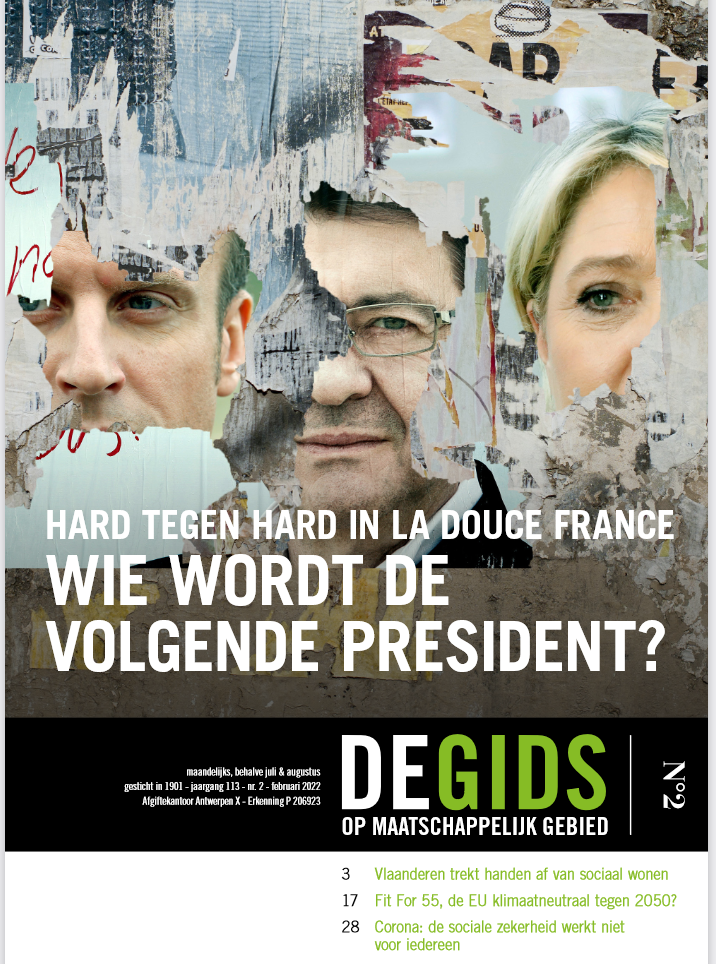
COMMENTAAR: Panel "Frankrijk" (de Volkskrant, 2 FEB 2022)


(bron afbeelding: Wikimedia Commons)

Ik heb de eer deel te mogen uitmaken van een panel dat voor de Volkskrant commentaar levert bij de Franse politiek en instellingen.

De eerste aflevering kan hier worden geconsulteerd, de tweede hier, de derde hier, de vierde hier, de vijfde hier, de zesde hier, de zevende hier.

donderdag, december 23, 2021

OPINIE: Over Taubira en Pécresse (knack.be)


(bron: google play)


Knack.be publiceerde een opiniebijdrage van uw dienaar rond de recentste evoluties in de présidentielles.

Eerste paragraaf:

De succesvolle lancering van Valérie Pécresse via het (interne, maar virtuele) ledencongres bij LR heeft de Franse presidentiële campagne opgeschrikt uit een tot nu toe kabbelend scenario. Iedereen lijkt te wachten op een volgende wending in de "netflixisation" van de campagne. Vooral ter linkerzijde is de druk bijzonder hoog. Bij gebrek aan betere indicatoren geven de peilingen momenteel aan dat geen enkel van de drie voornaamste kandidaten (Mélenchon, Jadot, Hidalgo) zich kan plaatsen voor de tweede ronde. Intussen wordt het nieuws beheerst door Valérie Pécresse en Eric Zemmour, bovenop een mediatieke sfeer die de afgelopen jaren ethisch en cultureel erg naar rechts is opgeschoven.

Lees verder op knack.be. 

dinsdag, december 14, 2021

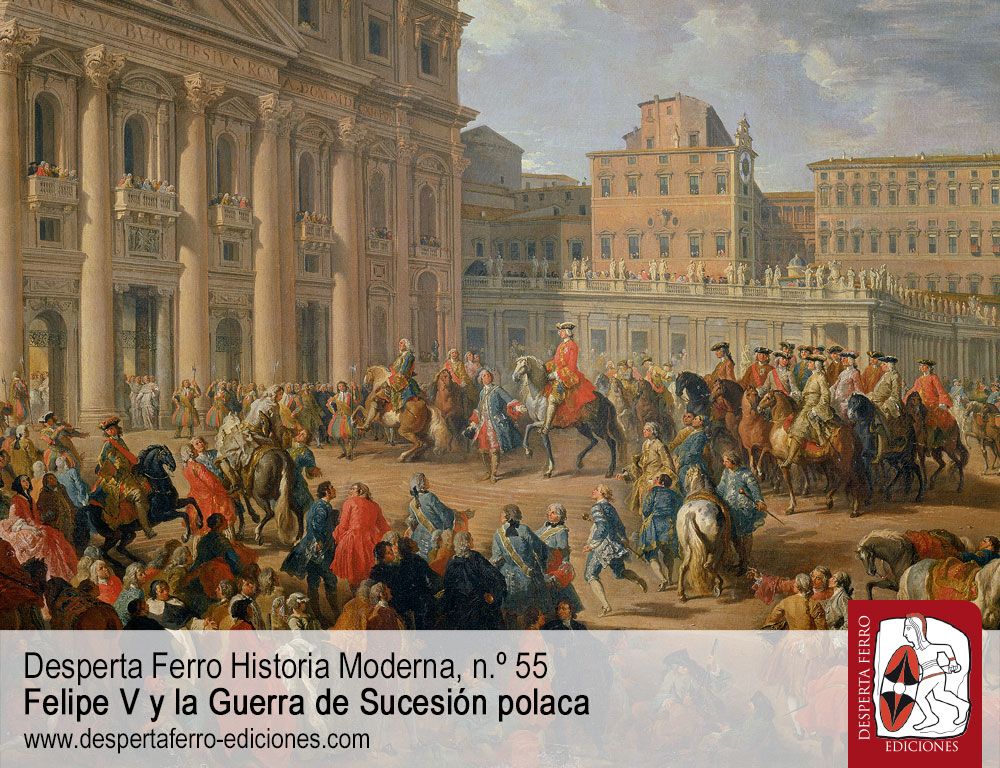
ARTICLE: ​Una paz europea [Felipe V y la Guerra de Sucesión polaca] (Desperta Ferro n° 55 (Dec 2021)


(image source: DespertaFerro)

Abstract:

La fuerza militar no hizo posible una victoria decisiva en clave clausewitziana en la Guerra de Sucesión polaca. Los bloques borbónico y austriaco tuvieron que negociar una solución pactada a la cual se amoldasen las reclamaciones existentes sin tensar excesivamente el orden internacional nacido de los tratados de paz de Utrecht, Rastatt y Baden. La diferencia esencial entre este conflicto y la Guerra de la Cuádruple Alianza consiste en el papel de las potencias marítimas, que habían permanecido neutrales en la disputa entre Carlos VI y Luis XV. Aunque sus propuestas no eran incompatibles con el desenlace final, Francia y Austria resolvieron la disputa directamente.

Read more (and buy the issue) on DespertaFerro's website. 

dinsdag, december 07, 2021

INTERVIEW: TerZake over Valérie Pécresse

(bron afbeelding: Wikimedia Commons)


Deborah Votquenne interviewde me maandag over de kandidatuur van Valérie Pécresse voor de Franse presidentsverkiezingen.

Dit kan worden herbekeken op VRTNU (tweede item van de dag).

vrijdag, december 03, 2021

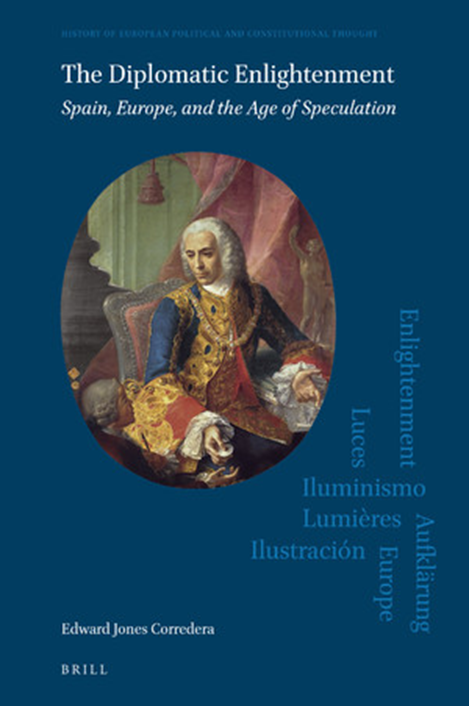
BOOK PRESENTATION: Ed JONES CORREDERA, The Diplomatic Enlightenment (MS Teams, 14 DEC 2021)


(image source: Brill)

The Research Group CORE and the UNED co-organise a digital book launch on 14 December 12:30-14:00. The publisher provides a discount code to participants. 

More information (including RSVP procedure) on the CORE Website.

More information on the book here.

donderdag, december 02, 2021

ENCYCLOPEDIA ENTRY: "Treaty on the Establishment of Peace Throughout Christendom (1464)", in: Hélène RUIZ FABRI (ed.), Max Planck Encyclopedia of International Procedural Law [Oxford Public International Law] (Oxford: Oxford University Press, 2021) [OPEN ACCESS]


(image source: OPIL)

First paragraph:
1 The Treaty on the Establishment of Peace Throughout Christendom (‘Treaty’ or ‘Peace Plan’) is a draft treaty that was proposed in 1463 and 1464 by King George of Podebrad of Bohemia (1420–1471) to the Kings of Hungary, Poland, and France, as well as to the Republic of Venice. Formulated as a plan for a crusade against the Ottoman Sultan Mehmed II (1432–1481), who had taken Constantinople in 1453, the text provided for the creation of an institutional framework comprising all European sovereigns, in equal ‘universal fraternity’, and has been portrayed by late...

Read more here: DOI 10.1093/law-mpeipro/e3721.013.3721.

[update 4 Apr 2025: this is now open access]


woensdag, december 01, 2021

HOOFDSTUK: "Hefboom naar sociale hervormingen? Bekwaamheidskiesrecht als surrogaat voor algemeen stemrecht, 1883-1893", in: Koen NEVENS, Kristof SALOMEZ, Evelien TIMBERMONT & Guido VAN LIMBERGHEN (eds.), Liber Amicorum Wilfried Rauws. Werk opgedragen aan een onvolprezen jurist. (Antwerpen: Intersentia, 2021), 845-859. ISBN 9789400014183


(bron afbeelding: Intersentia)

Abstract (English):

The Law of 24 August 1883 created the possibility for holders of a degree of primary education to participate in local elections. This reform, sponsored by the last homogenous Liberal government, was an attempt to delay the introduction of universal male suffrage, linking intellectual aptitude to electoral capacity. The system lasted ten years, and foresaw the possibility to pass an exam and obtain the primary education degree. The Belgian press, official statistics and earlier historical research allow to map this curious phenomenon.

Meer over het boek bij de uitgever. 

dinsdag, november 02, 2021

INTERVIEW: Jersey, Frankrijk en het VK (Radio 1:de Ochtend, 2 NOV 2021)


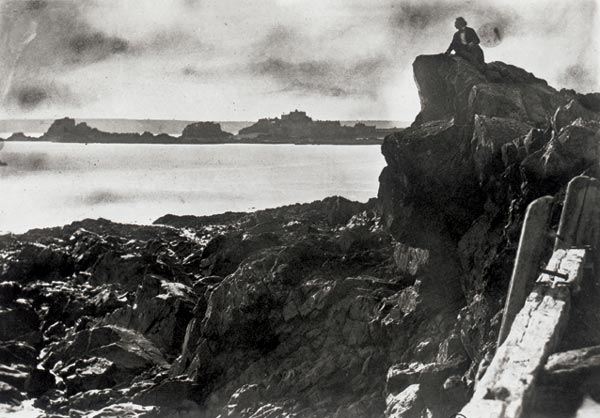
(afbeelding: Victor Hugo op Jersey (1852); bron: Wikimedia Commons)

Ik was vanochtend te gast bij deOchtend (Radio 1, Leen De Witte) over de diplomatieke spanningen rond de visrechten voor inwoners van Jersey (een "self-governed dependency" van de Britse kroon, restant van het hertogdom Normandië). 

Herbeluister de interventie hier (rond 1:37).

maandag, oktober 11, 2021

CONFERENCE RECORDING: "Teaching international law at King Leopold's Foreign Office"

The organisers of the conference "Law(s) and International Relations" (Orléans, LeStudium, 15-17 September 2021) have been so kind as to broadcast the recordings of the interventions online. See above for my intervention and here for the others.

CHAPTER: "L' alliance franco-anglaise contre Philippe V. Le droit au service de l'ordre ?" in: Joaquim ALBAREDA SALVADÓ & Núria SALLÉS VILASECA (eds.), La reconstrucción de la política internacional española. El reinado de Felipe V [Collection de la Casa de Velázquez; vol. 189] (Madrid: Casa de Velázquez, 2021), pp. 119-136. ISBN 9788490963470

Book abstract:

Este libro pretende aportar una visión de conjunto de la política exterior española durante el reinado de Felipe V, entre 1713 y 1746, periodo en el que se consolidaron la dinastía borbónica en España y el sistema de equilibrio europeo forjado en la paz de Utrecht. Aborda este asunto crucial, que no había sido tratado de forma sistemática, mediante una visión global y multidimensional que pone de relieve los vínculos existentes entre política interior y exterior, a la vez que analiza el rol de la monarquía de España en el contexto europeo. Expone las líneas maestras de esta política exterior de los gobiernos de Felipe V, analiza tanto los objetivos que perseguía (territoriales, políticos y económicos) como la reacción que suscitó en Europa, y, finalmente, efectúa un balance de sus características y de sus logros.

See book on Google Books (above) or check the publisher's website. 

See OpenEdition.org for the open access-version (DOI 10.4000/books.cvz.27675).

vrijdag, september 17, 2021

CHAPTER: "Edouard Descamps: From ‘negative neutrality’ to ‘positive pacigerate’": in P. Sean MORRIS (ed.), The League of Nations and the Development of International Law. A New Intellectual History of the Advisory Committee of Jurists [Routledge Research in Legal History] (London: Routledge, 2021), pp. 156-179, ISBN 9780367897536

(image source: Routledge)

Abstract:
Descamps (1847-1933), the president of the ‘Advisory Committee of Jurists for the Establishment of a Permanent Court of International Justice’ (ACJ), is the author of a consistent monograph on Belgian neutrality in 1902. His condemnation of ‘negative’ classical neutrality (premised on impartiality and abstention) and his advocacy of a ‘positive’ ‘pacigérat’ remained a core conviction in his career as international lawyer. This chapter will shed light on Descamps’ career at the crossroads of academia, teaching, and international law (I), to devote substantive attention to his analysis of neutrality (II) and, finally (III), to his interpretation of the compatibility of ‘pacigérat’ with the League of Nations’ security system. Descamps’ role as President of the ACJ, and his position in the debate on the sources of international law to be applied by the PCIJ should be appreciated in the light of these successive stages of development.

(read more here: DOI  10.4324/9781003020882-8)

maandag, september 13, 2021

INTERVIEW: Franse présidentielles (VRT Radio 1/TerZake)

(bron afbeelding: Wikimedia Commons)

Ik sprak gisteren met Radio 1 (De Ochtend; Jan Van Delm) en vandaag met TerZake (Inge Vrancken) over de Franse présidentielles van 2022.

maandag, augustus 23, 2021

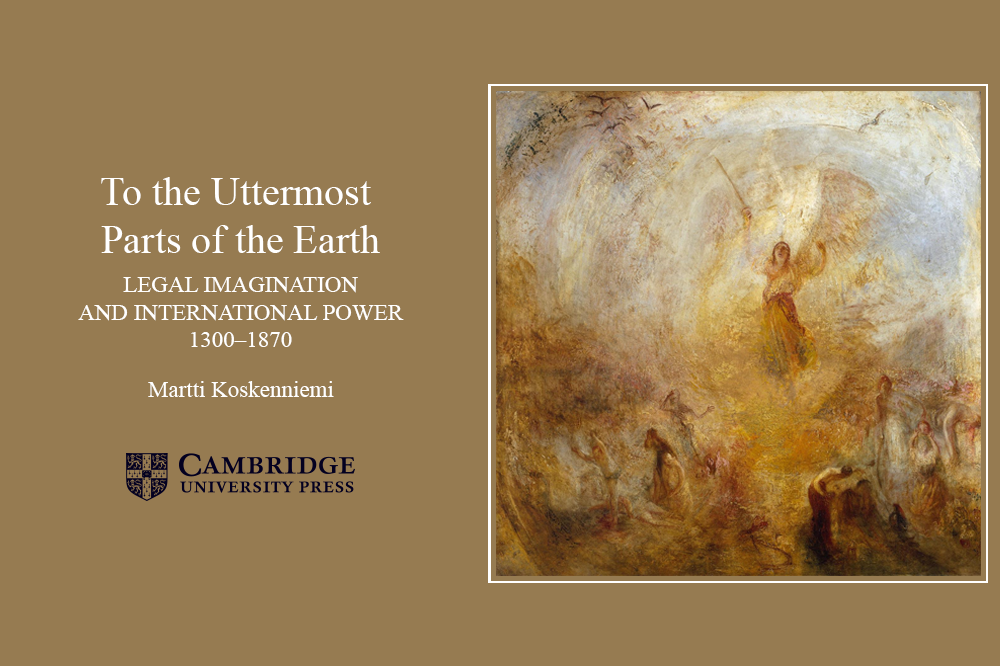
REVIEW SYMPOSIUM: Martti Koskenniemi's "To the Uttermost Parts of the Earth" (Völkerrechtsblog)

(image source: völkerrechtsblog)

I am honoured to have been invited to Völkerrechtsblog's review symposium on Martti Koskenniemi's To the Uttermost Parts of the Earth. Legal Imagination and International Power 1350-1870 (CUP 2021).

The text can be read here (DOI 10.17176/20210824-112559-0).


maandag, juni 28, 2021

INTERVIEW: Franse régionales (TerZake, 28 juni 2021)


(bron afbeelding: Wikimedia Commons)

Ik sprak met Willem Van Mullem (TerZake, VRT) over de Franse regionale verkiezingen.

Bekijk het fragment hier (vanaf 17:38).

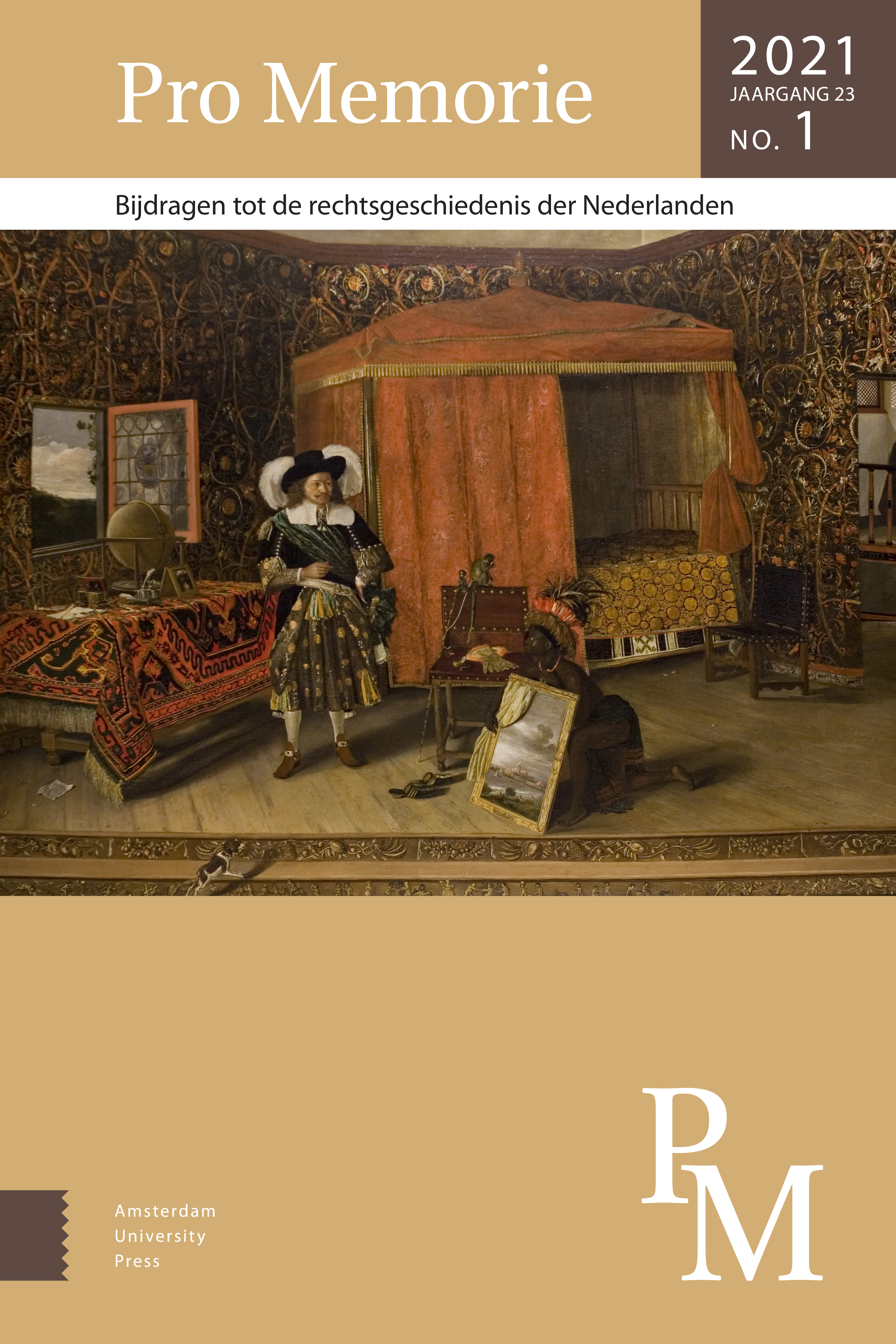
ARTIKEL: "Rogier versus Jottrand: dure beledigingen in de Belgische opiniepers (1861-1863)" (Pro Memorie. Bijdragen tot de Rechtsgeschiedenis der Nederlanden XXIII (2021), nr. 1, 79-109 [OPEN ACCESS]


Abstract:

The Belgian Constitution guaranteed political liberty, exemplified by the mandatory competence of the jury for judging political and press offences. However, the constitution did not literally mention quasi-delicts. In 1861, liberal statesman Charles Rogier was insulted by the ultramontanist Catholic newspaper . He sued the newspaper’s printer under tort law, and obtained a considerable amount of damages, bypassing the jury. Progressive radical lawyer Lucien Jottrand, former member of the Constituent Assembly, argued at length that the constitution exclusively reserved competence for both civil and criminal liability to the jury. The Brussels Court of Appeal and the Court of Cassation rejected this reasoning and insisted on the superior natural law-origins of tort law. Yet, this decision created a risk of private censorship, well documented in the press and in private archives on the legal battle around the 

Lees het artikel hier (DOI 10.5117/PM2021.1.005.DHON). 

Update (1 Jan 2023): dit artikel is in open access beschikbaar.

dinsdag, juni 22, 2021

INTERVIEW: De Franse regionale verkiezingen (Het Nieuwsblad, 21 JUN 2021)


(bron afbeelding: Het Nieuwsblad)

Ik sprak met Wim Dehandschutter (Het Nieuwsblad) over de Franse regionale verkiezingen.

Lees meer hier. Een kortere versie verscheen ook in de Gazet van Antwerpen en het Belang van Limburg. 

zaterdag, juni 19, 2021

INTERVIEW: Waarom Macron klappen krijgt (Maarten Rabaey, De Morgen, 19 JUN 2021)

(Bron afbeelding: De Morgen)

Ik werd door Maarten Rabaey (De Morgen) geïnterviewd over de regionale en departementale verkiezingen in Frankrijk.

Lees de tekst hier.

woensdag, februari 10, 2021

REFERENCE ENTRY: "The Peace of Utrecht (1713)" in Michael KOCSIS (ed.), The Global Encyclopedia of Territorial Rights (Heidelberg: Springer, 2020)


(image source: Springer)

Abstract:
The Peace of Utrecht consisted of several bilateral treaties concluded between 1713 and 1715 in Utrecht, in the Dutch Republic. These treaties ended the War of the Spanish Succession, which originated in the decease of Charles II (1661-1700), the last Habsburg king of the composite Spanish monarchy. These treaties did not involve Emperor Charles VI nor the Holy Roman Empire, who concluded peace separately with Louis XIV of France at the Peace Treaties of Rastatt (6 March 1714; Dumont 1731, 415-423) and Baden (7 September 1714, 436-444). The Peace of Utrecht was based on a partition of the Spanish monarchy, and thus on the balance of power between the Bourbon and Habsburg dynasties. Britain played a seminal role, and established its maritime supremacy to the detriment of its former ally, the Dutch Republic. Charles VI of Habsburg and Philip V of Bourbon, who had been contenders for Charles II’s succession, only concluded a final peace treaty in 1725. The Peace of Utrecht furthered the spread of Most Favoured Nations-clauses in bilateral Treaties of Trade and Navigation, and assured Britain of Gibraltar, Minorca, Acadia and Newfoundland. 

(read the entry here: DOI 10.1007/978-3-319-68846-6_611-1)

maandag, januari 25, 2021

ARTICLE: Justice and equality for all? Proportional representation in Belgium and France (1883-1921) (Seqûëncia XLI (2020), nr. 86, 28-62

(image source: seqüência)


Abstract:

Whereas 19th century Belgium is traditionally framed as heavily dependent on France, this image ought to be nuanced for its political system. During what Pierre Rosanvallon named the transnational ‘proportional moment’ (1899-1914), the introduction of Proportional Representation in parliamentary elections generated a French interest in Belgium as the ‘electoral laboratory of Europe’. Arguments raised in the French Chambre des Députés were similar to those used in Belgian Parliament. The present article addresses the structural differences between the electoral debate in both states. Whereas Belgian constitutional doctrine adapted smoothly to the introduction of proportionality (Oscar Orban/Paul Errera) and held a moderate position bordering on that of Hans Kelsen, French doctrine was divided between the Parisian Adhémar Esmein, who defended the majority system as the bedrock of republicanism, and provincial professors of constitutional law, who had corporatist ideas, or were in favour of judicial review (Joseph-Barthélémy, Léon Duguit). Raymond Carré de Malberg’s condemnation of proportional representation as impossible, or as the stepping-stone to direct democracy, ought to be situated within this context.

Read the full article here: DOI 10.5007/2177-7055.2020v41n86p28. 

woensdag, december 30, 2020

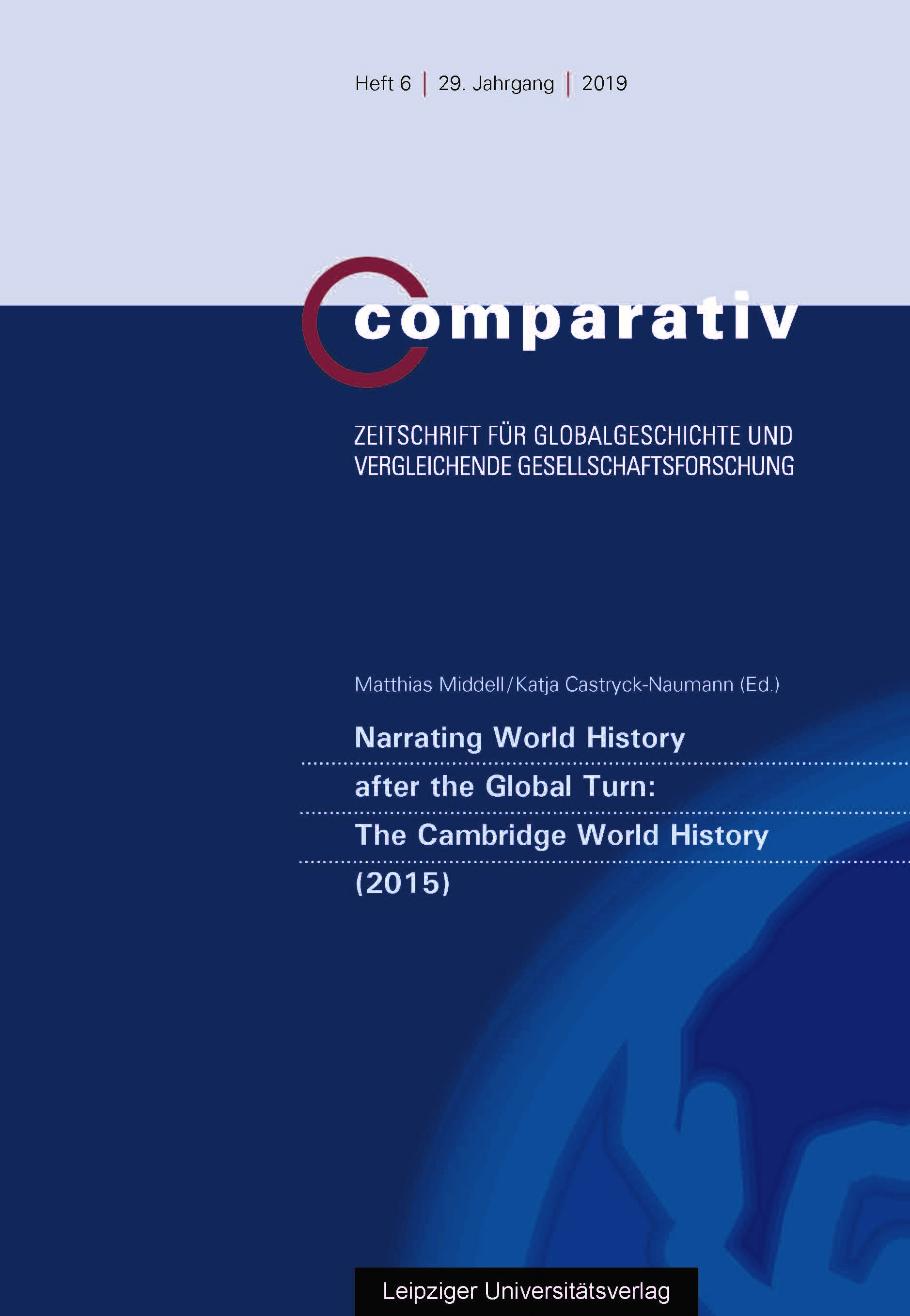
BOOK REVIEW: Leos Müller, Neutrality in World History (Comparativ:Zeitschrift für Globalgeschichte und vergleichende Gesellschaftsforschung VI (2019), 213-216


(image source: Comparativ)

I published a review of Leos Müller's insightful Neutrality in World History (Routledge, 2018) for the special issue "Narrating World History after the Global Turn: The Cambridge World History" of the journal Comparativ: Zeitschrift für Globalgeschichte und vergleichende Gesellschaftsforschung (ISSN 0940-3566).

Read more on the journal's website.

Update 18 December 2022: this book review is now available in open access. 

donderdag, december 17, 2020

CHAPTER: “Peace and Law”. In: I. DINGEL, M. ROHRSCHNEIDER, I. SCHMIDT-VOGES, S. WESTPHAL & J. WHALEY (Hrsg.). Handbuch Frieden im Europa der Frühen Neuzeit. Peace in Early Modern Europe. A Handbook [Reference] (Berlin/Boston: De Gruyter Oldenbourg, 2021), pp. 113-130. ISBN 9783110588057


(image: cover; source: DeGruyter)

Abstract:
Peace is a political construct in the early modern period. War was viewed as a process whereby two sovereign states pursued their rights by violence or artifice. Domestic and international law were intertwined in legal doctrine. Authors of natural law-treatises incorporated an ought-dimension in their writings to describe the framework in which sovereigns should act according to a systematic analysis of a morally established hierarchy. This chapter first provides an elementary overview of sources and historiographical traditions (I). Second, it presents the classical canon of doctrine, from Spanish neo-scholastics (Vitoria) to so-called positivism (Martens), as it developed in relation to the broader intellectual, religious and institutional context as Humanism, Enlightenment, confessionalisation, and the Empire shaped thinking about war and peace (II). Finally, the chapter offers a brief overview of the practical use of legal arguments: treaty collections and repositories of pamphlets were used inpolitical practice in conjunction with classical authors such as Gentili, Grotius or Pufendorf (III).
More information with DeGruyter. Publication expected in October 2020. (DOI 10.1515/9783110591316-006). 

(update: published 7 December 2020)

woensdag, oktober 28, 2020

INTERVIEW: Laïcité en corona-crisis in Frankrijk (Radio 1, De Wereld Vandaag)


(bron afbeelding: deboomhut.be)

Ik werd vandaag geïnterviewd door Xavier Taveirne in De Wereld Vandaag (Radio 1). Het gesprek kan hier herbeluisterd worden.

vrijdag, oktober 23, 2020

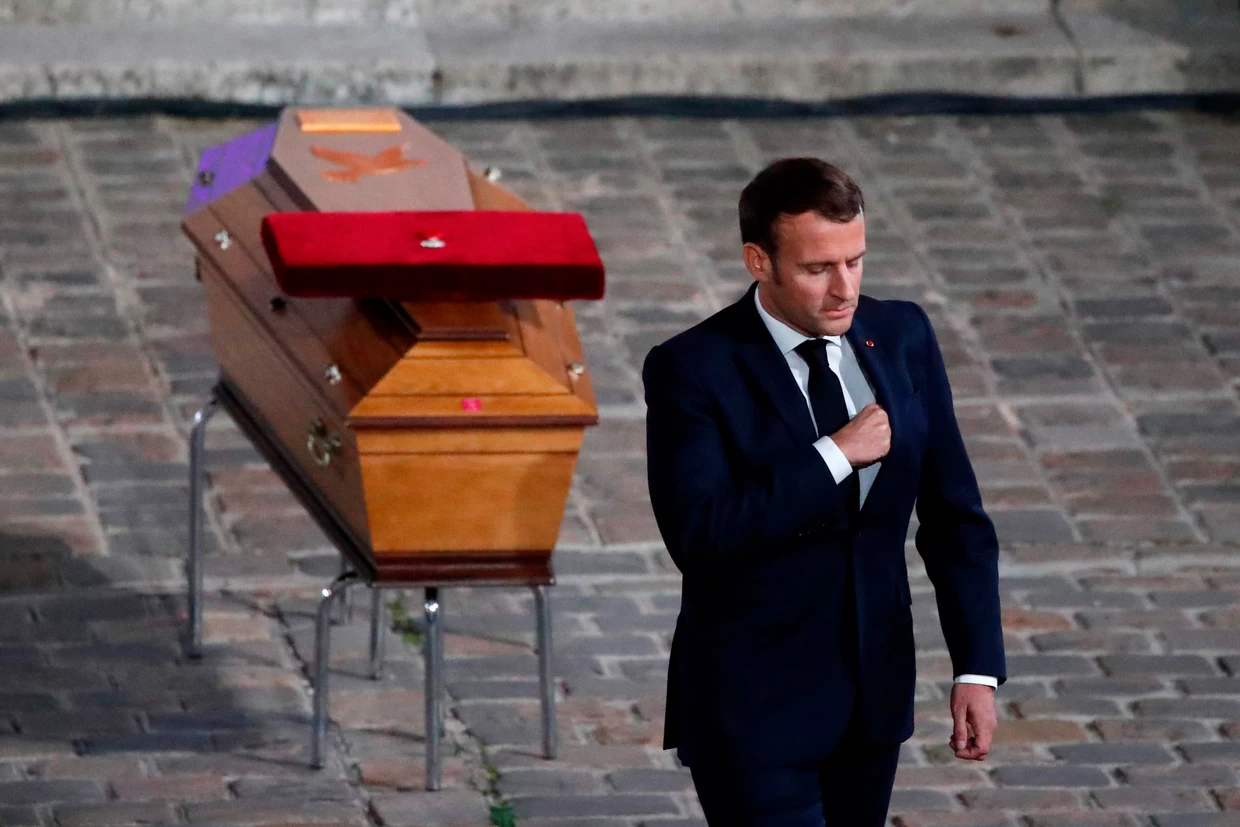
OPINIE: Samuel Paty verenigt Frankrijk rond de Republiek (De Morgen.be, 22 oktober 2020)

(bron afbeelding: De Morgen)

Ik schreef een stuk voor De Morgen over de gebeurtenissen en reacties in Frankrijk van de afgelopen dagen.

Eerste paragraaf:

De barbaarse moord op leerkracht geschiedenis Samuel Paty wordt wereldwijd gezien als een aanval op de vrijheid van meningsuiting. Dat is terecht, maar de specifieke Franse context is ook belangrijk. Leerkrachten zoals Paty genieten prestige als ‘instituteurs de la nation’. Zij maken kinderen tot burgers van de Republiek, en putten daar hun fierheid uit. Een carrière als vastbenoemd leerkracht na staatsexamen is nog steeds voor veel Franse studenten een eerbaar carrièrepad, ondanks de beperkte verloning. Toppolitici als Georges Pompidou en Lionel Jospin waren kinderen van onderwijzers, en hebben zelf les gegeven.

Lees verder op de site van de krant. 

donderdag, september 03, 2020

CHAPTER: "Portalis le jeune et le droit des gens" in: Raphaël CAHEN & Nicolas LAURENT-BONNE (dir.), Joseph-Marie Portalis. Diplomate, magistrat et législateur (Aix-en-Provence: PUAM, 2020), 153-180, ISBN 978-2-7314-1174-4

(image source: PUAM)

Abstract:
Joseph-Marie Portalis, who presided over the French Court of Cassation as its first president for 23 years, never published a global treatise on the law of nations, but had a strong interest in the law of nature and the law of nations. Hence, two of his publications can inform us on his deeper-rooted convictions. One is his famous report presented to the Académie des Sciences Morales et Politiques in 1840 on the prize question concerning the development of the law of nations since the Peace of Westphalia. A second example is his treatise on the nature of war, presented at the Academy during the Crimean War and published in 1856 by Vergé. I argue that national sovereignty, religion and a dislike of the perceived excesses of 18th century doctrine are essential to understand Portalis "the younger", even if he does not escalate his thinking to the likes of de Maistre.
(more on the book here)

maandag, augustus 10, 2020

CALL FOR PAPERS/INSCRIPTION: Section histoire du droit et des institutions, 58e Congrès de la Fédération des Cercles d'archéologie et d'histoire de Belgique (Tournai, 19-21 Août 2021); DATE LIMITE 30 septembre 2020

  Congrès Wapi 2020


Les inscriptions pour le 11e Congrès de l’Association des Cercles francophones d’histoire et d’archéologie de Belgique sont ouvertes. Il était prévu à Tournai du jeudi 20 au dimanche 23 août 2020, mais a été reporté au 19-21 août 2021.

Ce congrès sera aussi le 58e Congrès de la Fédération des Cercles d’archéologie et d’histoire de Belgique, Il prend place en Wallonie picarde sera organisé par trois sociétés hainuyères associées pour la circonstance : le Cercle royal d’histoire et d’archéologie d’Ath et de la région, la Société d’histoire de Mouscron et de la région et la Société royale d’histoire et d’archéologie de Tournai. Il bénéficiera en outre de la collaboration de Hannonia. Centre d’information et de contact des cercles d’histoire, d’archéologie et de folklore du Hainaut.

Les communications auront une durée maximum de 20 minutes. Le choix de la langue est libre (français, néerlandais, allemand). Le français demeure la langue officielle du Congrès.

Une section d'histoire du droit et des institutions sera organisée.

Pour envoyer votre proposition pour cette section, contacter le prof. Frederik Dhondt.

-------------------------------------

De inschrijvingen voor het 11e Congrès de l’Association des Cercles francophones d’histoire et d’archéologie de Belgique zijn heropend. Het congres was oorspronkelijk gepland in Doornik van donderdag 20 tot zondag 23 augustus 2020, maar is nu verdaagd naar 19-21 augustus 2021.

Communicatie duurt maximaal 20 minuten. De taalkeuze is vrij ( Frans, Nederlands, Duits), hoewel Frans de officiële taal van het congres blijft.

Er wordt een sectie over de geschiedenis van het recht en de instellingen georganiseerd. Om een bijdrage voor deze sectie voor te stellen, contacteer prof. Frederik Dhondt.

-------------------------------------

Plus d'informations/Meer informatie ici/hier
Pour l'inscription/Voor de registratie, cliquez ici/hier

zondag, augustus 02, 2020

WORKING PAPER: "Jean Rousset de Missy et les Intérêts présens des puissances de l’Europe: territoires, souveraineté et argumentation juridique pratique"


Abstract:
Known as a journalist or 'compiler', Jean Rousset de Missy (1682-1762) contributed on the to the world's first treaty collections, the Corps Universel Diplomatique du Droit des Gens (1726-1731, edited by Jean Dumont). This contribution focuses on Les Intérêts présens des puissances de l'Europe (1733), a two-volume work published to serve as a practical alternative to the 8 volumes in-f° of the Corps Universel. Rousset discusses treaty obligations undertaken by sovereign entities, and links them up with an analysis of their long-term geopolitical interests. I sketch the impact of the Peace Treaties of Utrecht (1713) on Rousset's work, and argue that his treatment of the matter gives a unique insight into argumentative strategies. Parties in a quarrel use arguments drawn from the law of nature, Roman law, canon law, customary law, feudal law or domestic law, and only seldom refer to law of nations doctrine. Rousset's synthesis at the end of every section is representative of diplomatic practice in his time. Treaties contained political compromises. In order to be effective, they needed precedence over domestic norms. In a final section, I examine Rousset's treatment of Savoy and Spain after 1713.

Read the paper on the OSF: DOI 10.17605/OSF.IO/ASZDM

zondag, juli 05, 2020

BOEKBESPREKING: "O. MORETEAU, K. MODÉER & A. MASFERRER (eds). Comparative Legal History [Research Handbooks in Comparative Law] (Cheltenham: Elgar, 2018)', Tijdschrift voor Privaatrecht LVI (2019), nr. 3-4, 1394-1400

(bron afbeelding: Elgar)

Het Tijdschrift voor Privaatrecht LVI (2019), nr. 3-4 publiceert op pagina's 1394 tot en met 1400 een bespreking die ik maakte van het Research Handbook Comparative Legal History dat in 2018 bij Elgar verscheen.

Meer informatie hier.

zaterdag, juli 04, 2020

INTERVIEW: "remaniement" (VRT/TerZake, 3 juli 2020)

(bron afbeelding: Twitter)

Ik werd door TerZake geïnterviewd over de "remaniement" in Frankrijk.

Het fragment kan bekeken worden vanaf 32:00 op VRTNU.