woensdag, januari 25, 2017

ESIL RESEARCH FORUM GRANADA: Workshop "Neutrality in the History of International Law" (30 Mar 2017)

(image source: ESIL/SEDI)

The Interest Group History of International Law of the European Society of International Law announced the line-up for this year's workshop at the Research Forum in Granada (Spain), which will take on 30 March 2017.

L’intervention d’humanité dans la Guerre des Boxeurs (drs. Paul Bourgues/ATER at the Université de Grenoble)
Contested Turkish Neutrality in International Law (Hakan Gungor/Turkish National Education)
Neutrality in the United Nations – The Case of Austria (Prof. dr. Peter Hilpold/Professor at the Universität Innsbruck)
International Legal Thought : A Legal Project and an Integrative Approach (Dr. PD Thomas Kleinlein/Privatdozent at the Universität Frankfurt,  Dr. David Roth-Isigkeit-Berlin/Research Fellow at the Excellenzcluster Normative Orders/Frankfurt)
Questioning Territory’s Contribution to Neutrality (dra. Gail Lythgoe/University of Glasgow)
Ethiopia, Neutrality and the First World War (Jakob Zollmann/Research Fellow Global Public Law at the WZB Berlin)
Organisation: Interest Group Steering Committee.

Ignacio de la Rasilla y del Moral (Associate Professor, Brunel)
Frederik Dhondt (Assistant Professor, VUB/Visiting Professor, UA/Fellow, FWO-UGent)
Thomas Skouteris (Assistant Professor, American University in Cairo)
Inge Van Hulle (Assistant Professor, Tilburg)
Registration for the event here.

dinsdag, januari 24, 2017

CALL FOR PAPERS Training, Ideas and Practices. The Law of Nations in the Long Eighteenth Century (Paris, 18-19 May 2017); DEADLINE 20 FEBRUARY 2017


CALL FOR PAPERS
Training, Ideas and Practices. The Law of Nations in the Long Eighteenth Century 
(Paris, 18-19 May 2017)


The purpose of this conference is to explore the roots of international law and the various concepts related to the “law of nations” by looking at the legal language of diplomats and foreign offices in Europe during the long eighteenth century. The conference also aims to render the variety and complexity of specific mechanisms through which the law of nations was applied for diplomatic use, to explore social and cultural aspects, and to investigate the practical questions that diplomats frequently faced (N. Drocourt & E. Schnakenbourg (eds.), Thémis en diplomatie, PURennes, 2016).

The relationship between diplomacy and the law of nations is at best ambiguous. On the one hand, the law of nations seems to be a hybrid product of philosophical concepts and a digest of diplomatic practice. Lawyers have difficulty resisting the temptation to write a purely academic or genealogical history of the law of nations. The frequent invocation of authors such as Vattel as an authority seems to support this (P. Haggenmacher  & V. Chetail (eds.), Vattel’s International Law from a XXIst Century Perspective, Brill, 2011). On the other hand, interaction in negotiations involves a lot more than invoked legal principles. A thorough analysis of diplomatic practice often reveals implicit rules within diplomacy as a social field  (P. Bourdieu, Sur l’Etat, Seuil, 2012). Legal arguments are a part of this microcosm, but geopolitical determinants and state interests can bend and bow the use of legal language.

One of the main issues of this conference will be  whether law of nations theories influenced diplomatic practice and at the same time whether diplomatic practice altered traditional law of nations concepts. Through fruitful dialogue between young legal historians, historians of political thought and historians of politics from France, Germany and other parts of Europe, we would like to explore and investigate three different scenarios in which law of nations theories emerged both in the practice and the doctrine of diplomacy:

1)      Training of diplomats 

Was the law of nations the basis of diplomatic education? Did diplomats also receive specific, in-house, foreign affairs training? Was it only theoretical or also based on practice and experience? Was there already a form of professionalisation of diplomats, especially in view of later developments in the 19th century (L. Nuzzo & M. Vec (dir.), Constructing International Law – The Birth of a Discipline, V. Klostermann, 2012)? Finally, to what extent can we envisage a common European diplomatic culture? 

2)      Circulation of ideas and diplomatic networks

What was the legal and intellectual background of the various traités du droit des gens? To what extent were legal expertise (G. Braun, La connaissance du Saint-Empire en France du baroque aux Lumières (1643-1756), De Gruyter, 2010) or legal rhetorics pragmatic tools used in everyday politics? For whom did thinkers such as Abbé de Saint-Pierre (1658-1743) write their treatises? The sovereign? Legal advisers? Public opinion?  If the law of nations formed a kind of a common European diplomatic culture, how did it spread throughout Europe? Can we identify the same use in various diplomatic flows of the time? How were diplomatic networks organised?  Can we find examples of specific territories - such as the principalities of Walachia and Moldova, between the Ottoman Empire and the “European” powers – functioning as kinds of “diplomatic hubs”?  

3)      Transformation 

Is the diplomatic habitus of the Vienna Congress a turning point?  Where did the transition from the 18th to the 19th century take place, both in theory and in practice? How important was the impact of Enlightenment and French Revolutionary thought (M. Bélissa,  Fraternité universelle et intérêt national, 1713-1795, Kimé, 1998)? How far can we find echoes in diplomatic culture and correspondence? 

We kindly invite young scholars (up to 6 years after PhD) to present their new research within French-German and European perspectives. All applications must be sent by 20 February 2017 with a short CV (5 to 10 lines) and a proposal of 400 words to diplomacyconference2017@gmail.com. Results will be communicated by 15 March 2017.  This conference has received the generous support of the CIERA (Centre interdisciplinaire d'études et de recherches sur l'Allemagne, www.ciera.fr) as a colloque junior and will take place on the 18th (afternoon) and 19th (morning) of May 2017.  

Papers can be presented in English, French or German. A peer-reviewed publication of the proceedings is envisaged.


Organising Committee
Raphael Cahen (Orléans/VUB-FWO)
Frederik Dhondt (VUB/Antwerp/Ghent-FWO)
Elisabetta Fiocchi Malaspina 

Scientific Committee
Jacques Bouineau (La Rochelle)
Paul De Hert (VUB)
Dirk Heirbaut (Ghent)
Christine Lebeau (Paris I)
Gabriella Silvestrini (Piemonte Orientale)
Matthias Schmoeckel (Bonn)
Antonio Trampus (Venezia)
Miloš Vec (Vienna)


APPEL À CONTRIBUTIONS
Formation, idées et pratique. Le droit des gens dans le long dix-huitième siècle
(Paris, 18-19 mai 2017)


Les origines du droit international et les divers concepts du « droit des gens » seront au cœur d’une rencontre scientifique, portant sur l’étude du langage juridique des diplomates et des chancelleries européennes pendant le long dix-huitième siècle. Les mécanismes d’application spécifiques à travers lesquels le droit des gens fut invoqué pour une utilisation diplomatique ne se conçoivent pas en dehors des aspects culturels et sociaux, ou des problèmes pratiques que les diplomates avaient à trancher (N. Drocourt & E. Schnakenbourg (dir.), Thémis en diplomatie, PU Rennes, 2016).

                La relation entre la diplomatie et le droit des gens est ambiguë. D’une part, le droit des gens semble un produit hybride de concepts philosophiques et une cristallisation de pratique diplomatique. Les juristes peinent à résister la tentation d’écrire une histoire purement académique ou généalogique du droit des gens. L’invocation fréquente d’auteurs tels que Vattel en est une indication courante (P. Haggenmacher & V. Chetail (dir.), Vattel’s International Law from a XXIst Century Perspective, Brill, 2011). Néanmoins, l’interaction de la négociation entraîne bien plus qu’une invocation de principes juridiques. Une analyse rigoureuse de la pratique diplomatique révèle des règles implicites au sein de la diplomatie comme champ social (P. Bourdieu, Sur l’Etat, Seuil, 2012). L’argumentation juridique relève de ce microcosme et doit donc être apprécié dans une sociabilité qui transcende les traditions juridiques nationales (L. Bély, L’art de la paix en Europe : naissance de la diplomatie moderne, XVIe-XVIIIe siècle, PUF, 2007). Toutefois, les déterminants géopolitiques et les intérêts d’État peuvent amender ou infléchir l’utilisation d’arguments juridiques.

                Une question centrale sera d’essayer de savoir si les théories du droit des gens ont influé la pratique diplomatique, et si de son côté la pratique diplomatique a réussi à changer les concepts traditionnels du droit des gens. Un échange fructueux entre jeunes historiens du droit, historiens de la pensée politique et historiens « du politique » de France, d’Allemagne et d’autres traditions intellectuelles européennes permettra d’explorer trois scénarios différents à travers lesquels les théories du droit des gens émergeaient aussi bien en pratique qu’en doctrine diplomatique.

1)      Formation des diplomates
Le droit des gens constituait-il le cœur de la formation diplomatique ? Qu’en fut-il des enseignements pratiques, organisés par les administrations étatiques des affaires étrangères ? Quel était le rapport entre les connaissances tirées de l’objet même de la négociation (la pratique) et celle dérivée des écrits qui font autorité dans nos traditions scientifiques ? Pouvait-on vraiment parler de professionnalisation, également eu égard aux développements du XIXe (L. Nuzzo & M. Vec (dir.), Constructing International Law – The Birth of a Discipline, V. Klostermann, 2012) ? Finalement, qu’en fut-il du caractère commun ou européen de la culture diplomatique des divers corps ?

2)      Circulation des idées et réseaux diplomatiques
Les traités dévoués au droit des gens sont souvent étudiés en isolement, hors contexte, dans leur lignée intellectuelle ou académique. Cependant, qu’en fut-il de leur utilisation pratique ou de celle de l’expertise juridique plus générale (G. Braun, La connaissance du Saint-Empire en France du baroque aux Lumières (1643-1756), De Gruyter, 2010), comme outil rhétorique dans la politique quotidienne ? À qui s’adressaient les traités de penseurs comme l’abbé de Saint-Pierre (1658-1743) ? Le souverain, ou bien ses conseillers juridiques, ou bien l’opinion de la république des lettres ? Si le droit des gens constituait une sorte de culture diplomatique européenne commune, comment se diffusait-elle sur le continent ? Peut-on identifier des usages similaires dans les flux diplomatiques ? Comment les réseaux s’organisaient-ils ? Peut-on identifier des carrefours diplomatiques, tels que les principautés de Valachie et Moldavie, entre l’Empire Ottoman et les puissances européennes ?

3)      Transformation
Le Congrès de Vienne (1815) fut-il vraiment un tournant pour le droit des gens ? Si nous pouvons identifier une transition, relève-t-elle de la doctrine juridique ou plutôt des idées politiques ? À quel degré la pensée des Lumières et de la Révolution a-t-elle impacté le droit des gens classique (M. Bélissa, Fraternité universelle et intérêt national, 1713-1795, Kimé, 1998) ? Dans quelle mesure la correspondance diplomatique en fut-elle le témoin ?

Nous invitons les jeunes chercheurs (jusqu’à six ans après soutenance de la thèse de doctorat) à présenter leurs recherches nouvelles, dans une perspective franco-allemande et européenne. Les propositions doivent être envoyées pour le 20 février 2017 au plus tard, accompagnées d’un CV concis (5 à 10 lignes) et d’un résumé de 400 mots au maximum (diplomacyconference2017@gmail.com). Les résultats seront communiqués pour le 15 mars 2017 au plus tard.

La conférence a reçu le soutien du CIERA (Centre interdisciplinaire d’études et de recherches sur l’Allemagne, www.ciera.fr) en tant que colloque junior. Elle aura lieu à Paris, le 18 mai 2017 (à la Maison de la Recherche), et le 19 mai 2017 (Fondation Biermans-Lapôtre, Cité Internationale Universitaire de Paris). Les contributions peuvent être présentées en anglais, français ou allemand. Les frais de déplacement et d'hébergement pourront être pris en charge sous certaines conditions. Une publication soumise au contrôle des pairs est envisagée.

Comité organisateur
Raphael Cahen (VUB-FWO/Orléans-POLEN)
Frederik Dhondt (VUB/Anvers/Gand-FWO)
Elisabetta Fiocchi Malaspina

Comité scientifiqueJacques Bouineau (La Rochelle)Paul De Hert (VUB)
Dirk Heirbaut (Gand)
Christine Lebeau (Paris I Panthéon Sorbonne)
Gabriella Silvestrini (Piemonte Orientale)
Matthias Schmoeckel (Bonn)
Antonio Trampus (Venise)
Miloš Vec (Vienne)

donderdag, januari 05, 2017

BOEKBESPREKING: LEJEUNE (Carlo). Grenzerfahrungen. Eine Geschichte der Deutschsprachigen Gemeinschaft Belgiens. Band 2: Tuche, Töpfe, Theresianischer Kataster (1500-1794), Revue Belge de Philologie et d'Histoire = Belgisch Tijdschrift voor Filologie en Geschiedenis. XCIV (2016), 2, p. 543-545 3 p.

Ik besprak voor het Belgisch Tijdschrift voor Filologie en Geschiedenis het boek Grenzerfahrungen. Eine Geschichte der Deutschsprachigen Gemeinschaft Belgiens. Band 2: Tuche, Töpfe, Theresianischer Kataster (1500-1794).

De tekst verschijnt na een paar jaar in open access op persée. In afwachting kan hij ook via het Web of Science worden opgespoord (accession number 000401497000026).

dinsdag, december 06, 2016

Peiling La Libre/RTBf (december 2016)

(bron afbeelding: Wikimedia Commons)

Vorige week brachten La Libre Belgique en de RTBf hun politieke peiling uit. Na de CETA-episode, met een rol op het voorplan voor Paul Magnette, is dit vooral in Franstalig België een interessant moment. Ook de troebelen rond de besparingen in de ziekteverzekering (en de aanvallen vanuit alle partijen op de minister van Sociale Zaken) waren prominent in het nieuws.

De algemene cijfers van de peiling geven een verrassende 18% aan de PTB in Wallonië. Dit zou toch wel "du jamais vu" zijn. Ook de sterke stijging van het Vlaams Belang -die al meerdere keren door peilingen voorspeld is- valt onder dezelfde categorie.

1. Cijfers peiling

Vlaanderen


Partij Peiling 2014
N-VA 26,30% 31,88%
CD&V 16,30% 20,48%
Vlaams Belang 12,30% 5,92%
sp.a 13,20% 13,99%
groen 12,70% 8,70%
openVLD 12,40% 14,15%
PVDA 4,20% 2,53%

De peiling geeft een "reserrement" in het midden. Vlaams Belang, groen, openVLD en sp.a zouden erg dicht bijeen zitten. In elk geval binnen de foutenmarge van 3,2%.

Wallonië
Partij Peiling 2014
PS 25,40% 30,90%
MR 23,10% 26,68%
cdH 9,40% 15,17%
Ecolo 9,20% 8,62%
PTB 18,40% 5,76%
PP 4,00% 4,60%
Défi 2,20% 2,90%

De PS wordt laag gehouden, op een kwart van de stemmen. De MR profiteert niet van de uitoefening van de macht, en erodeert een beetje. cdH krijgt een dreun van 6%, PTB schiet omhoog.

Brussel
Partij Peiling 2014
PS 20,40% 25,60%
MR 19,00% 21,90%
Défi 10,50% 10,80%
Ecolo 11,30% 10,50%
cdH 7,00% 9,40%
PTB/PVDA 9,60% 4,00%
N-VA 4% 2,60%
openVLD 2,80% 2,60%
PP 4% 2,80%
VB 2,40% 2,30%
sp.a 1,50% 2,00%
groen 2,50% 1,20%
CD&V 2,50% 1,90%

Hier eveneens een uitgesproken stijging voor de PTB (meer dan verdubbeling), samen op een zakdoek met de PTB/PVDA, Défi (ex-FDF) en Ecolo. Vooraan blijft de PS de MR nipt voor, maar is het verlies toch duidelijk (5%).

2. Zetels
De verhoudingen uit de peiling toegepast op de stemcijfers uit 2014 (regionale parlementen) geeft de volgende verhoudingen in zetels:

Franstalig België
Partij Kamer Zetels 2014 Verschil
PS 19 23 -4
MR 18 20 -2
cdH 5 9 -3
Ecolo 7 6 +1
PTB 12 2 10
PP 0 1 -1
Défi 2 2 0

De kanonscore van de PTB heeft natuurlijk gevolgen voor het zetelaantal. Hoe vreemd het ook klinkt, aan de huidige tendenzen kan de PTB best wel de grootste partij in Luik zijn. Na het overlijden van Michel Daerden haalde de PS in 2014 nog "slechts" 30% van de stemmen. Een doortrekken van de regionale tendens stelt dit bij naar net onder de 25%. Iets waar de PTB boven kan geraken. Let wel: "kan", want het lijkt toch moeilijk voor te stellen dat de radicale partij zou groeien van nog geen 8% tot boven het kwart. In dat geval is het 5 zetels PTB, 4 voor PS en MR (beiden 5 resp 4% verlies). Iedereen verliest in Luik een zetel aan de PTB. Ook de PP, die onder de kiesdrempel verdwijnt.

In Henegouwen blijft de afstand groot. De PS zou zelfs in slechte vorm nog een derde van de stemmen moeten halen, goed voor 7 zetels (-2). De PTB  (+3, 4 zetels) blijft nipt achter de MR (-1, 4 zetels), maar voor Ecolo (2 zetels, +1) of de cdH (1 zetel, -1).

In Namen, Waals-Brabant en Luxemburg haalt de PTB niets. In Brussel zijn twee zetels mogelijk, ten koste van PS en cdH.

Als deze tendens zich doorzet, zal het al dan niet aangaan van een coalitie met de PTB een politiek gespreksonderwerp worden in Franstalig België. 12 van de 63 zetels in de Kamer, het is "non négligeable". "Incontournable" zeker niet, maar toch... PS en cdH, mét Ecolo, halen in de Communauté  Wallonie-Bruxelles mogelijks geen meerderheid. Dit zou Wallonië  veroordelen tot een "GroKo" tussen PS en MR in geval van "cordon sanitaire" tegen de PTB. MR, cdH en Ecolo zouden de meerderheid niet halen in deze situatie.

Vlaanderen
Partij Kamer Verschil
N-VA 26 -7
CD&V 15 -3
Vlaams Belang 12 +9
sp.a 12 -1
groen 10 4
openVLD 11 -3
PVDA 1 1


N-VA houdt beter stand dan bij vorige enquêtes . De kloof met CD&V blijft groot. Groen wint in stemmen, maar minder in zetels.  In Antwerpen is er bijvoorbeeld 0,28% te kort (tegenover de achtste zetel van N-VA). sp.a verliest een zetel (0,33% te kort), de PVDA heeft dan weer 0,46% te kort om de laatste zetel van het VB over te nemen. Dit toont ook weer aan dat het spel van de zetels niet veel te maken heeft met absolute percentages, maar vooral met de relatieve positie in elke kieskring. Gezien de foutenmarge van de peiling is die hier dus met zeer veel voorzichtigheid te lezen. De slokop is Vlaams Belang, dat in alle provincies zetels wint (1 in Vlaams-Brabant, 2 elders).

Vlaams Parlement
Partij Vlaams Parlement Verschil
N-VA 33 -9
CD&V 20 -6
Vlaams Belang 15 9
sp.a 16 -1
groen 15 6
openVLD 16 -1
PVDA 2 2
UF 1 0

Hier wijken de tendenzen niet af van die voor de Kamer. Het verschil tussen groen en sp.a is kleiner, gezien het grotere aantal te verdelen zetels. Behalve in West-Vlaanderen (1,2% te kort) haalt groen telkens vlot een zetel meer dan voor de Kamer. sp.a verliest alweer een zetel in Antwerpen (0,8% te kort).

3. Conclusie
De situatie wordt vooral moeilijker in Franstalig België. Een coalitie zonder N-VA, VB en PVDA (samen 39 zetels op 87) is mogelijk in Vlaanderen voor de Kamer, maar vereist de inzet van de drie traditionele partijen plus groen. In het Vlaams Parlement (de zes Brusselse zetels buiten beschouwing gelaten) zijn minstens drie partijen nodig voor de meerderheid. De regeringspartijen verliezen 16 zetels op 118 (14%). Een tripartite heeft geen meerderheid (52/118). Met groen erbij wel (67/118). N-VA en VB samen staan ver van een separatistische meerderheid (48/118).

Een klassieke tripartite heeft nog een nipte meerderheid in de Kamer (80/150). Dit ligt onder andere aan het zwakke resultaat van de Franstalige traditionele partijen. Samen verliezen ze tien (!) van de 63  Franstalige zetels. MR, cdH en Ecolo halen slechts 30/63. Enkel met Défi erbij (met vier partijen) is er een (nipte) meerderheid van één zetel (32/63).

Radicaal links (+11) en extreem-rechts (+9) zijn de winnaars van de peiling, ten koste van de traditionele partijen (-17) en de N-VA (-7). De groene winst in Vlaanderen en Henegouwen (+5) en de exit van de PP (-1) vervolledigen het totaal.

zondag, november 27, 2016

CONFERENCE: "Permanent neutrality or permanent insecurity ? Obligation and self-interest in the defense of Belgian neutrality" [International Law in the Long Nineteenth Century (c. 1775-1914). From the Public Law of Europe to Global International Law] (Leuven: KULeuven, 24-25 Nov 2016)

(image source: KUL)

I presented a paper entitled "Permanent neutrality or permanent insecurity ? Obligation and self-interest in the defense of Belgian neutrality" at the conference International Law in the Long Nineteenth Century (c. 1775-1914): From the Public Law of Europe to Global International Law, organized by the Research Unit for Roman Law and Legal History (R. Lesaffer/I. Van Hulle) at the KULeuven.

Paper abstract:
The Congress of Vienna is seen as a turning point in many late 19th-century textbooks of international law. Among its institutional realizations, the instauration of permanent neutrality, announcing the banishment of war from the dictionary of civilization, seems to stand out. Even if this institution corresponded to a voluntary practice in the Swiss case, it was a novelty applied to the United Kingdom of the Netherlands, a sui generis extension of William VI of Orange’s sovereignty over the former Dutch Republic. The guarantee of the Great Powers’ invisible hand, coupled with a system of infant global governance, would have banned war from statesmen’s dictionaries. The self-declared disinterested engagement of the Great Powers at the Conference of London in 1830-1831 automatically implied the transmission of the “reciprocal” obligations of neutrality onto the new Belgian state. Belgium’s pioneering role in international law at the end of the nineteenth century would have been a logical consequence of its neutrality, aloof from the evils of Ancien Régime geopolitics. Neutrality conferred a higher moral status to the independent liberal state on the former battleground of Europe, just as the liberal character of its 1831 constitution created sympathy abroad.
I plead for a more critical historical assessment than the above-mentioned narrative. In the interplay between issues of contemporary international law and genealogical attempts to prove historical relevance, differences matter as much as resemblances do. Recent studies on the Vienna Congress downplay the institutional achievements of the negotiations in Vienna. Doctrinal classics do not show a watershed with regards to 18th century modes of reasoning.  Kluber even estimated that the changes in the positive law of nations between 1789 and 1815 did not justify a major overhaul of traditional intellectual categories. Compulsory neutrality, introduced in 1815, transmitted in 1831 and confirmed in 1839, was just one out of multiple tools to guarantee “le repos de tous.” Its symbolical and discursive value was mostly superficial. Neutrality was first seen as a potential economic advantage, but foremost as a fragile and threatened mode of existence.
The relative calm Franco-British relationship under Louis-Philippe (1830-1848) helped to consolidate the country’s independence. One could argue that the July Monarchy desperately intervened to prevent a reunion with its newly independent northern neighbor. The revisionary and expansive views of Napoleon III (1849-1870) consisted a frontal attack on international order as created in Vienna. Even after the French defeat of 1870-1871, this fear was reignited. Confronted to the geopolitical upheaval on the Balkans, in the Middle East or in the tensions between Bismarck’s Germany and the French Third Republic.
Precisely in this late 19th century-context, wherein the Vienna settlement became part of history and was increasingly perceived as a turning point, the Revue de droit international et de legislation comparée, the public writings of Ernest Nys (ULB) or Edouard Descamps (Louvain), Leopold II’s advisers, presented the country’s neutral status as one of the main achievements of international law and implicitly as a proof of Belgium’s fitness to execute a mission of civilization in Africa. In a continuous geopolitical context of contiguity to France, Britain and the German space, only the option of a sovereign country under international protection could ensure la fusion des races, corresponding to social necessity.Neutrality did not consist in a unilateral renunciation of armed force to solve disputes, but rather in the early modern idea of medius in bello (Grotius, Bynkershoek). Neutrality ended at the first shot in a new armed conflict. “Permanent” neutrality implied balancing an outside factor –the willingness of the guarantors to intervene- against an internal factor, namely the capacity to defend oneself and make use of the natural right of self-defense. Although the latter pertained to the obligations of neutrality, it also activated the eternal debate between the constitutive and declaratory nature of international recognition, or between the hierarchy between international and constitutional law. In the words of Louis Arendt, director of political affairs at the Foreign Ministry: “La neutralité perpétuelle est non pas une condition essentielle, mais seulement une modalité de l’existence nationale. Chaque fois qu’il y aura conflit entre le droit de conservation et le devoir de neutralité, le droit doit l’emporter sur le devoir”. By the end of the 19th century, Belgian doctrine officially advocated the primacy of national sovereignty over diplomacy. Newspapers ironized that neutrality did not apply when overseas markets were to be conquered. In practice, the veil of secrecy covered manifold attempts to wrestle assurances from the great powers that they would cling to the obligations undertaken in 1839.


Acta will appear as a collective volume in the Studies in the History of International Law (SHIL) series (ed. R. Lesaffer) with Brill.

dinsdag, november 22, 2016

COMMENTAAR: Circus Sarkozy gaat dicht, meester Fillon neemt over (De Morgen, 22 november 2016)


Ik schreef een commentaarstuk voor de krant De Morgen over de recente politieke ontwikkelingen in Frankrijk.

De tekst kan hier worden gelezen.
Zie ook vermelding op de Volkskrant-blog.

woensdag, november 02, 2016

BOOK: Luis RIBOT & José María IÑURRITEGUI (eds.), Europa y los tratados de reparto de la Monarquía de España, 1668-1700. Madrid: Biblioteca Nueva [Historia, ed. Juan Pablo FUSI], 2016, 338 p. ISBN 9788416647583, € 25


Next week on Friday (11 November), the book Europa y los tratados de reparto de la Monarquía de España, 1668-1700 (ed. L. Ribot & J.M. Iñurritegui) will be presented in Madrid. This work in Spanish collects articles from several scholars on these epochal treaties.

Table of contents:

  • Introducción (José María Iñurritegui)
  • Los tratados de reparto de la Monarquía de España. Entre los derechos hereditarios y el equilibrio europeo (Luis Ribot) (29-54)
  • Del Contrato al Tratado. La Transformación Legal de la Sucesión Española (1659-1713) (Frederik Dhondt) (55-78)
  • El reparto del imperio español: La imposible búsqueda del equilibrio europeo (Lucien Bély) (79-92)
  • Embajadores, negociaciones e "intereses de Estado": Teorías y prácticas (1668-1714) (Daniela Frigo) (93-124)
  • Las negociaciones anglo-francesas sobre los tratados de reparto de España (1698-1700): Una reevaluación (David Onnekink) (125-146)
  • Pérdida de España: Ciencia de reparticiones y crisis de soberanía (José María Iñurritegui) (147-172)
  • Leopoldo I: La Política imperial, los derechos dinásticos y la sucesión española (Christoph Kampmann) (173-194)
  • "Dentro de la misma España, en esta misma península". Discurso y auto-representación en Portugal a propósito de la sucesión de Carlos II (David Martín Marcos) (195-216)
  • Los tratados de reparto, la revolución de la política exterior inglesa y el caso de Saboya (Christopher Storrs) (217-246)
  • Guerra y alianzas en la lucha por la hegemonía europea durante la segunda mitad del siglo XVII. El papel de España (Antonio José Rodríguez Hernández) (247-276)
The volume also contains a publication of sources:
  • Estudio Introductorio de los tratados de reparto de la Monarquía de España (Julio Arroyo Vozmediano) (279-290)
  • Primer tratado de reparto, 19 de enero de 1668 (291-300)
  • Segundo tratado de reparto, 11 de octubre de 1698 (301-316)
  • Tercer tratado de reparto, 3 de marzo de 1700 (317-338)
The work is available for € 25. See publisher's website.

dinsdag, oktober 11, 2016

Peiling VRT/De Standaard (oktober 2016)

(bron afbeelding: Wikimedia Commons)

Gisteren brachten de Standaard en de VRT hun politieke peiling uit. Een enquête die met bijzondere aandacht gelezen wordt, gelet op de confrontatie tussen CD&V en de andere partijen in de coalitie.

Het is vervelend een "halve" peiling als deze te interpreteren, aangezien de cijfers uit het Zuiden van het land niet in rekening worden genomen.

Voor wat ze waard zijn, geef ik nog even mijn berekeningen mee.

1. Cijfers peiling

Vlaanderen

PartijPeiling2014
N-VA27,8%31,88%
CD&V16,8%20,48%
Vlaams Belang8,1%5,92%
sp.a15,8%13,99%
groen13,3%8,70%
openVLD13,6%14,15%
PVDA3,4%2,53%

CD&V wordt laag gezet, nek aan nek met sp.a, maar dat gebeurt in andere enquêtes ook. De winst voor Vlaams Belang en PVDA wordt afgetopt. Opvallend is natuurlijk de enorme winst voor groen (+4,5% tegenover de verkiezingen van 2,5 jaar geleden).

2. Zetels
De verhoudingen uit de peiling toegepast op de stemcijfers uit 2014 (regionale parlementen) geeft de volgende verhoudingen in zetels:


KamerVerschil
N-VA27-6
CD&V15-3
Vlaams Belang7+4
sp.a14+1
groen12+6
openVLD11-3
PVDA1+1

N-VA houdt hier beter stand dan in de voorgaande enquêtes (zetelverlies in Limburg (-1), Vlaams-Brabant (-1), West-Vlaanderen (-2, heel nipt, laatste zetel in balans met CD&V) en Antwerpen (-3). Oost-Vlaanderen is stabiel. CD&V betaalt het gelag van het groene succes: -1 in Oost-Vlaanderen, -1 in Vlaams-Brabant en ook in Limburg (nipt, in balans met laatste zetel sp.a). openVLD blijft op het resultaat van de vorige peiling (1 zetel kwijt in Limburg, Vlaams-Brabant, Oost-Vlaanderen).

De groene oppositie pikt maar liefst zes extra zetels op (+2 in Antwerpen, +1 in Oost-Vlaanderen, +1 in West-Vlaanderen, +1 in Vlaams-Brabant, +1 in Limburg), en wordt daarmee groter dan de openVLD. sp.a kan een zetel winnen in Limburg (ten koste van CD&V). De PVDA haalt -zoals in de andere peilingen- de kiesdrempel in Antwerpen (5,211%).

Het Vlaams Belang, tenslotte, groeit veel minder (stabiel in Antwerpen, +1 in Oost-Vlaanderen, West-Vlaanderen, Vlaams-Brabant en Limburg).


VP
N-VA37-6
CD&V23-3
Vlaams Belang8+2
sp.a18+2
groen14+5
openVLD16-1
PVDA1
+1
UF                                  1              =

Voor het Vlaams Parlement zijn de uitkomsten anders, omdat er meer zetels te verdelen zijn, wat in het voordeel van grotere partijen speelt. Wie om mathematische redenen (net de laatste zetel gemist) in de Kamer iets verliest, heeft dat (met een groter aantal zetels) vaak niet voor het Vlaams Parlement.

Voor het Vlaams Parlement verliest N-VA een zetel in Oost-Vlaanderen en twee in Vlaams-Brabant. Het verlies is drie zetels in Antwerpen.  CD&V blijft stabiel in Oost-Vlaanderen, maar verliest in West-Vlaanderen (-1), Antwerpen (-1) en Vlaams-Brabant (-1). openVLD blijft stabiel in Antwerpen, West-Vlaanderen en Vlaams-Brabant, maar verliest een zetel in Oost-Vlaanderen.

Groen wint twee zetels in Antwerpen, en telkens een zetel in Oost- en West-Vlaanderen en Vlaams-Brabant. sp.a wint een zetel in Antwerpen en Vlaams-Brabant. PVDA wint ook hier een zetel in Antwerpen.

Het Vlaams Belang blijft stabiel in Oost- en West-Vlanderen, wint een zetel in Vlaams-Brabant en in Antwerpen.

In de provincie Limburg blijven alle partijen stabiel. De zes Brusselse Vlamingen (in 2014: 2 zetels voor openVLD, 1 zetel voor de andere partijen m.u.v. het Vlaams Belang) zitten hier niet bij.

3. Conclusie
Op federaal vlak is het moeilijk hier consequenties uit te trekken. Binnen de Nederlandse taalgroep behoudt de federale coalitie haar meerderheid (54/87). Een N-VA-VLD-groen alternatief (50/87) heeft evenwel ook een meerderheid. Een olijfboom (41/87) heeft die niet.

Op Vlaams vlak houdt de huidige coalitie haar meerderheid (76/118). Een olijfboomcoalitie (56/118) komt nog vier zetels te kort, een tripartite haalt slechts 57/118, of drie zetels te weinig. Een N-VA-VLD-groen-meerderheid is ook hier mogelijk (67/118).

The 1698 partition treaty of the Spanish monarchy at its 318th anniversary

(Tallard, source: Wikimedia Commons)

At the occasion of the 318th anniversary of the partition treaties concluded between Louis XIV and William III (King of England, stadholder in the United Provinces), time to enlighten the reader on this essential episode of early modern diplomacy.

The partition treaties of the Spanish Succession, concluded in The Hague on 11 October 1698 (22 CTS 1698) and 25 March 1700 (13 CTS 145), are the perfect example of diplomatic alternatives to war. Although these documents were never executed, they contained the blueprint of a political solution for the problem of the Spanish Succession, which kept Europe in suspense from 1659 to 1715. The treaties illustrate the ambiguous nature of French foreign policy under Louis XIV (1638-1715). In John C. Rule’s words: “Napoleon dictated, Louis negotiated.” Diplomacy was not the mere handmaiden of the military, but an instrument in its own right. The partition treaties were elaborated under the aegis of Jean-Baptiste Colbert de Torcy (1665-1746), Louis XIV’s last secretary of state for foreign affairs. The works of Arsène Legrelle (1834-1899) rehabilitated this colossal diplomatic undertaking as a masterwork of statecraft.

(image source: Wikimedia Commons; the territories in green are those controlled by the Spanish monarchy at Charles II's decease: the Spanish kingdoms, Naples, Sicily, Sardinia, the Duchy of Milan, the Southern Netherlands; off the map: the Spanish colonies in America and Asia)

France, England and the United Provinces divide the Spanish inheritance
The question of the succession of Spain’s last Habsburg King Charles II « The Bewitched » (1661-1700) kept Europe in suspense for most of the latter half of the 17th century. Connected to both the House of Bourbon and the junior branch of the House of Habsburg in Vienna, the fate of Charles II’s composite dominions could make the balance tilt decisively in favour of either of both powers. The quarrel between France and Habsburg on Charles’s succession is expressed in a number of legal documents, stretching from 1659 (the marriage of Louis XIV and the Spanish Infanta Maria Teresa (1638-1683)) to 1725 (final reconciliation between the French and Habsburg candidates) and caused a European war of more than a decade, the War of the Spanish Succession (1702-1714).

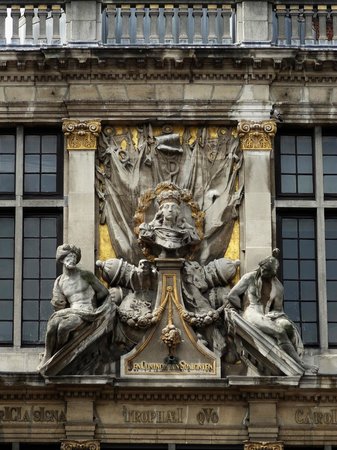
(Charles II of Spain on the Grand Place in Brussels; This photo is courtesy of TripAdvisor)

The bipolar nature of the quarrel between French and Austrians was real. Competing factions at Charles II’s court fought for the monarch’s favor in drafting his last will. After his decease in October 1700, an armed struggle was inevitable to decide on an actual partition. However, this logic of confrontation, embodied in battles as Blenheim (1704), Ramillies (1706) or Oudenarde (1708) was paralleled by diplomatic approaches to divide the Spanish inheritance.

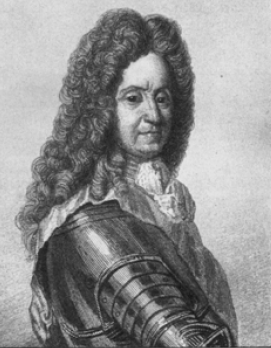
(Leopold I of the Holy Roman Empire; Source: Wikimedia Commons)

Louis XIV and Emperor Leopold I (1640-1705), both married to a daughter of Philip IV (1605-1665), Charles II’s predecessor, concluded a first secret partition treaty on 18 January 1668. Maria Teresa, Louis XIV’s queen, had renounced her rights to the Spanish throne before marrying him. French diplomats contested the renunciation’s validity, but their arguments were not founded in public law. In the midst of the conflict between France and Spain on the fate of the Spanish Netherlands, and for Austria at a time here the rivalry with the Ottoman Empire necessitated a scaling down of geopolitical ambitions. The agreement foresaw the attribution of the Spanish Netherlands to France.

(Maria Teresa of Spain, Queen of France; source: Wikimedia Commons)

Thirty years later, the political context had changed fundamentally. The recovery of the major part of Hungary and a successful thrust into the Balkans under Eugene of Savoy (1663-1736) had reinvigorated the Emperor’s position. Leopold I considered he could claim the whole of the Spanish monarchy for one of his sons, archduke Charles. This unilateralist vision found support in both the testament of Philip IV and the ensuing testaments of Charles II. Both monarchs put the unity of the Spanish dominions as a cornerstone of their reasoning.

(the Battle of Zenta, 11 september 1697, whereby Eugene of Savoy beat the Ottoman Army; Source: German Historical Documents)

France, had a double approach. On the one hand, it tried to bargain an agreement on the Spanish Succession with an external player. William III, King of Great Britain and stadholder in the United Provinces (1650-1702), held the balance between France and Habsburg. Without Imperial participation, Louis XIV negotiated a partition of the Spanish monarchy through his ambassador in London, Tallard. The starting point of William’s reasoning was that the Treaty of Riswick (signed on 20 September 1697, 21 CTS 347), which brought an end to the Nine Years’ War (1688-1697), was in itself insufficient to guarantee stability in Europe. The quarrel between France and Austria on the Spanish succession was well known, as were the legal arguments on both side. William assured Louis XVI’s ambassador Tallard that “this quarrel would not be resolved by lawyers, and that it might be feared that one would need to fight by the sword to decide it” (Tallard to Louis XIV, 8 Apr 1698).

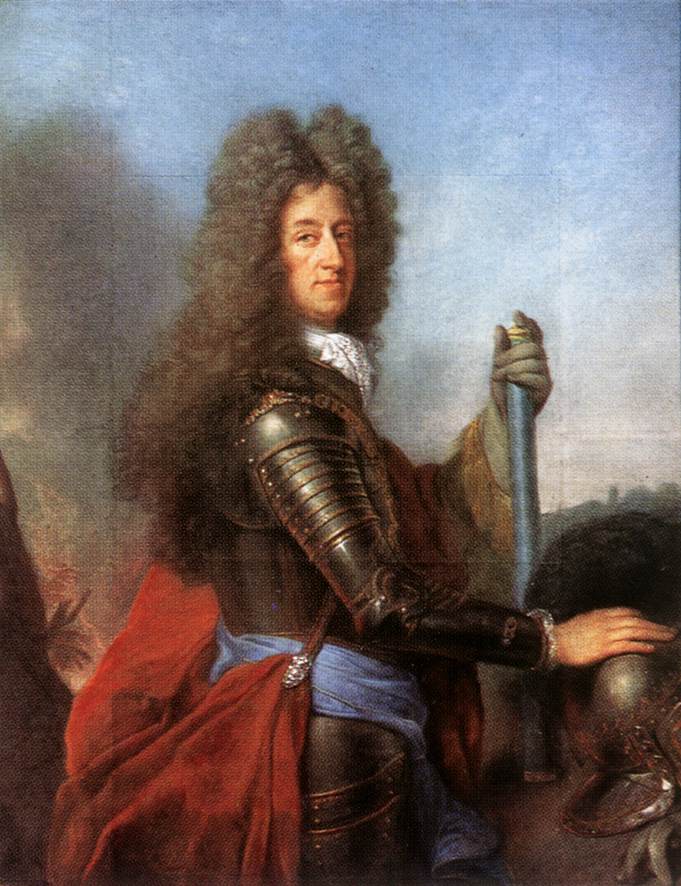
(Max II Emanuel of Bavaria, governor-general of the Spanish Netherlands and Elector, source: Wikimedia Commons)

This agreement foresaw in a three-way split of the Spanish monarchy. Leopold I had wed the infanta Margarita Teresa (1651-1673), half-sister of Louis XIV’s wife Maria Teresa. The daughter from the latter marriage, Maria Antonia (1669-1692) had espoused Maximilian II Emanuel, Elector of Bavaria and governor-general of the Spanish Netherlands since 1691 (1662-1726). Maria Antonia had renounced her rights to the Spanish throne before her marriage to Max Emanuel, but this was not an obstacle for William III. Their offspring could occupy a middle position between the houses of Bourbon and Habsburg. Joseph Ferdinand of Bavaria was thus the ideal general heir of the Spanish monarchy. The Dauphin (Louis XIV’s eldest son, born in 1662) and archduke Charles of Habsburg (Leopold I’s second son, born in 1685) would then become specific heirs and only receive parts of the Spanish possessions as an exception to the general rule (Louis XIV to Tallard, 24 Jul 1698). Joseph Ferdinand would rule in Spain and the colonies, as well as in the Spanish Netherlands. France and Austria could then divide the Italian possessions. Milan would go to archduke Charles of Austria (art. 7), the Kingdoms of Naples and Sicily, as well as the Tuscan presidia to the Dauphin (art. 6), Louis XIV’s sole surviving legitimate son. Yet, Joseph Ferdinand (1692-1699), Max Emanuel’s son, deceased in Brussels at the age of six on 9 February 1698, rendering the partition treaty inoperable.


(Emperor Charles VI, pretender to the Spanish throne as archduke, 1700-1713)

This three-way split corresponded to a long conversation in European diplomacy. The fate of the Spanish Netherlands had been uncertain since the sixteenth century. On the one hand, these dominions were the heartland of the Burgundian inheritance of Emperor Charles V (1500-1555). On the other hand, the distance between Spain, its Italian possessions and the Southern Netherlands caused geopolitical and economic woes. The Dutch Republic, invaded by France in 1672 and nearly wiped out at that occasion, was in need of military reassurance at its southern border. Two distinct possibilities were envisaged: either, on the one hand a new dynasty, interested in defending these territories with all available means, or, on the other hand, the right for the Dutch army to use the Spanish Netherlands as a bulwark. Philip II (1527-1598) had appointed his daughter Isabella Claria Eugenia (1566-1633) and her husband Albert of Habsburg (1559-1621) as sovereigns. Yet, their childless marriage could not provide a second Spanish Habsburg branch in Brussels. Joseph Ferdinand was buried near these illustrious predecessors.

(Johan De Witt; source: Wikimedia Commons)

During the War of Devolution (1667-1668), talks had been going on between Louis XIV and the Dutch pensionary Johan De Witt (1625-1672), drawing on an earlier design by Richelieu and Mazarin to create an independent ‘corps de république’ of cantons, allied to Holland. Another solution would have been an outright partition between France and Holland, as proposed by Richelieu. After the Peace of Riswick, William III obtained the concession from Max Emanuel to place Dutch garrisons in several fortified places in the South (January 1698). These “Barrier” fortresses should slow down or stop French invasion. The option for Joseph Ferdinand of Bavaria was thus in reality a new opportunity to install a new sovereign prince in a region at the crossroads of European armies. Whereas Leopold I had promised the Spanish Netherlands to France in January 1668, the ensuing invasion of Holland in 1672 had made a similar cession impossible.

(Charles II "the bewitched"; Source: Wikimedia Commons)

Spanish reaction
In Madrid, Charles II reacted to this diplomatic scheme by appointing Joseph Ferdinand as his role heir in November 1698. The conflict between two norms had by then become evident. On the one hand, domestic public law pleaded for the unity of the Spanish possessions. On the other hand, international balances required a partition. Whereas William III had presented the partition negotiations as a political over a legal solution, modern international lawyers would rather see this as the primacy of international arrangements and collective security over domestic norms. Throughout the negotiations, diplomat emphasized the higher interest of Europe (art. 2), which required preventive measures (art. 3). The Spanish monarchy could never be allowed to fall into the hands of a single major power. If domestic laws of succession did not provide for a solution, international agreements ought to. Art. 13 of the treaty foresaw an automatic alliance among the contracting parties in case one of them did not respect the agreement.

(The Duchy of Milan, of major geostrategic importance between France, Austria and Savoy; source: Wikimedia Commons)

1700
A year later, Louis XIV and William III operated a two-way split, which was of course harder to negotiate and to impose. The Spanish monarchy had an impact on four theatres: the Spanish Netherlands (on France’s Northern border), Italy (on France’s South-eastern border, and traditionally claimed by the Holy Roman Empire), Spain (on France’s South-western border) and the colonies overseas (where French interests clashed with those of the maritime powers. Picking Joseph Ferdinand of Bavaria had the advantage that neither France nor Austria could acquire a preponderant influence on the continent.  Neither the Emperor nor Bavaria would have been able to pursue their ambitions against France without William III’s support.

(Philip IV, last Habsburg King of Spain to have had legitimate descent; Source: Wikimedia Commons)

The new situation in 1699 was quite different.  A two-way split became inevitable. This entailed the risk that either France or Austria would feel clearly disadvantaged at the outcome. Nevertheless, “for the common good of Christianity”, negotiations were reset. The Bavarian solution was ruled out and Louis XIV affirmed his belief that any solution whereby his power would largely surpass that of the house of Austria, would be inacceptable to Europe (Louis XIV to Tallard, 13 Feb 1699). With Joseph Ferdinand’s decease, Max Emanuel lost his sole valid legal title on the Spanish inheritance. His first wife Maria Antonia had died eight years earlier. Diplomatic solutions could not work without at least a legitimate descent from Philip IV. The Spanish population, as Louis XIV feared, would never acquiesce in such an outcome.

The French envisaged exchanges of Milan with either the dukes of Savoy or Lorraine. Both territories were immediately adjacent to France and had been a long coveted object. Lorraine had been the object of French occupation during international conflicts. Savoy had resisted both Imperial and French claims, and held a supplementary claim on the Spanish throne. The Franche-Comté, another Spanish enclave, had already been annexed at the Peace of Nimwegen (11 Sep 1678, 14 CTS 437).

(the Grand Dauphin; Source: Wikimedia Commons)

The 1700 partition treaty allotted the Duchy of Milan, the Kingdoms of Naples and Sicily to the Dauphin (art. 4), with the Tuscan presidia, the marquisate of Finale and the province of Guipuzcoa (including the towns of Fontarabia and San Sebastian). The treaty equally foresaw in the possibility of an exchange of the Duchy of Milan for those of Lorraine and Bar. Charles of Habsburg replaced Joseph Ferdinand of Bavaria as general heir. The crowns of Spain (art. 6) would be his, just as the colonies and the Spanish Netherlands. This attributed the main parts of the Spanish succession to Austria, save for the coveted Italian territories.  The Emperor had a term of three months to adhere to the settlement (art. 7).

(Declaration of War by the Emperor, source: Europeana/Österreichische Nationalbibliothek)

William Roosen has described the run-up to the actual declarations of war (5 May 1702 for the Empire) as a playing ground for toddlers. Once the external observer turns his back, the crowd is involved in a bitter fight, whereby none of the participants can remember the exact cause. The legitimacy of the partition treaties could of course be questioned from the Spanish point of view. Conformably to the testament of Philip IV, Charles II reiterated his wish to keep the lands he inherited, united. This was a geopolitical phantasy, and untenable in view of the existing balance of power between France and Austria. Moreover, the Maritime Powers (Britain and the Dutch Republic) had a more than accessory interest in the Spanish colonies overseas. A deal would have needed to involve them as well, besides the original pretenders.

(Philip of Anjou as Philip V of Spain; source: Wikimedia Commons)

The King is dead...
At Charles II’s decease on 30 October 1700, a courier left Madrid for Versailles, in order to present Charles II’s last will for acceptance. The Spanish monarch had decided to appoint first Louis XIV’s second grandson, the Duke of Anjou (1683-1746). In case Philip would inherit the crown of France, his younger brother, the Duke of Berry would replace him (1686-1714). If France declined, then the courier had to move on to Vienna, to archduke Charles. Finally, in case the latter declined as well, to Torino, to request Duke Victor Amadeus of Savoy (1666-1732). The house of Savoy held a claim on the Spanish monarchy, on the basis of the marriage between Philip II’s daughter Catharina Michaela (1567-1597) to Duke Charles Emmanuel I of Savoy (1580-1630).

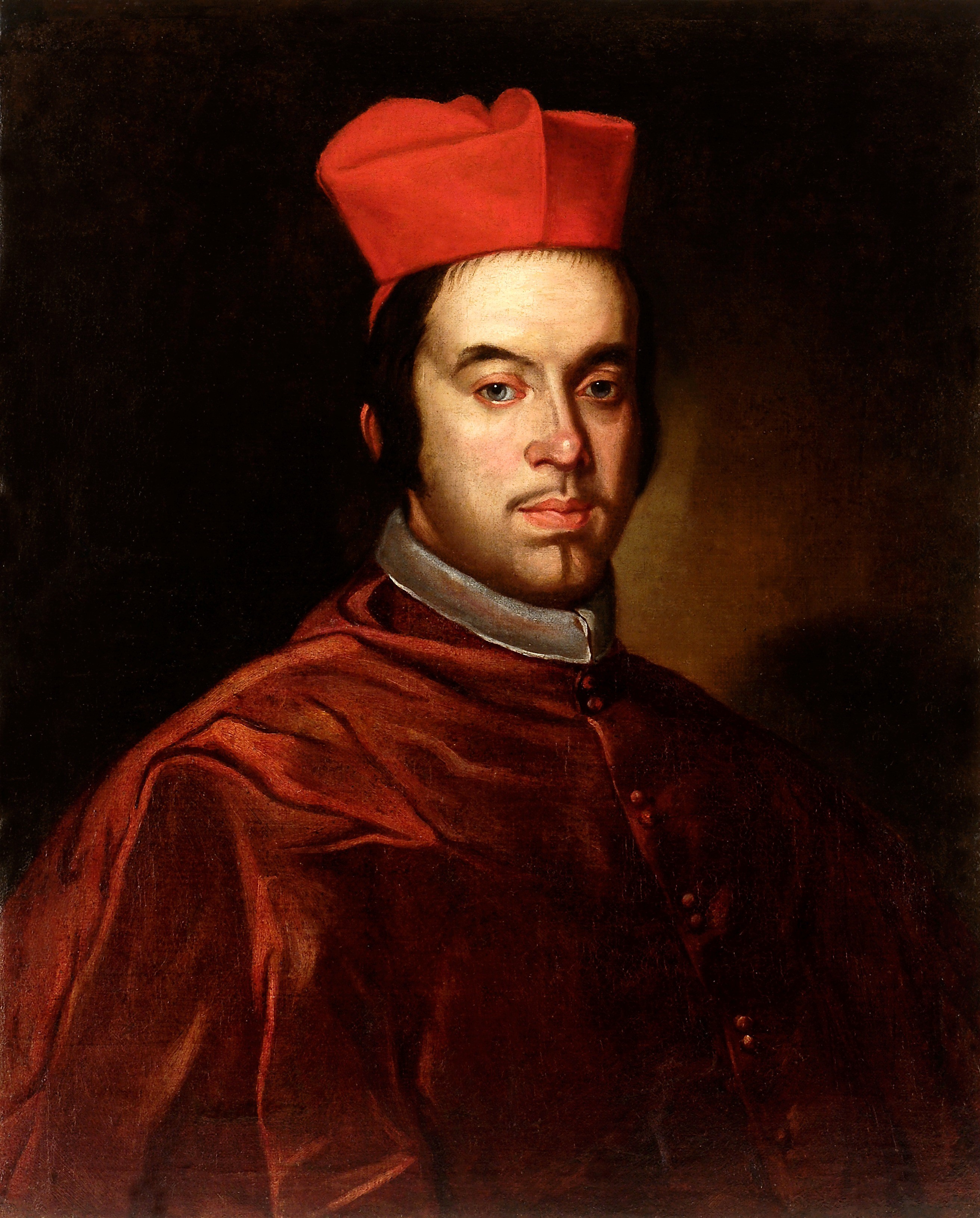
(Cardinal Portocarrero of Toledo; Source: Wikimedia Commons)

In parallel with the succession treaties, Louis XIV used the French diplomatic network to obtain a favorable Spanish testament. Marie-Françoise Maquart’s thesis has demonstrated how the Spanish Grandes opted for the unity of the composite monarchy, and preferred the French over the Austrian candidate. Cardinal Luis Manuel Fernández de Portocarrero, Archbishop of Toledo (1635-1709) convinced the suffering sovereign to opt for the French cause. From June to 2 October, date of the royal signature of the testament, Charles was tossed around between both parties at court. Pope Innocent XIII (1615-1700)’s opinion was asked for. The Pontiff advised to keep the Spanish possessions united, and thus ignore the partition treaties. His preference went to a French candidate.

Louis XIV decided to tear up the partition treaties, and execute the Spanish will. This decision was not taken lightly, as the Conseil d’en haut deliberated twice on the subject, on 9 and 10 November 1700. Torcy was opposed to a declaration of war, as transpires from secondary sources. The Dauphin, by contrast, would have insisted on his second son Philip’s rights. Louis, Duke of Burgundy (1683-1711) was set to become King of France. Depriving Philip of a crown outside France would reduce disproportionately. Counsellors as Vauban (1633-1707) or Chamlay (1650-1719) advised Louis XIV not to rely too much on William III’s guaranty. It was unlikely that the Dutch or British would intervene against an Austrian candidate installed on the throne in Madrid. If a war had to be fought in order to reach a new partition, France would be better off fighting it outside its own borders, in the Spanish Netherlands or with Spain on its side. Colonial revenues were a non-negligible argument in the trade-off.

The Bourbons take Spain
Consequently, Philip of Anjou left Versailles for Madrid on 4 Dec 1700. His rule would last over four decades. Yet, the War of the Spanish Succession led to the Spanish-perceived ‘loss’ of Flanders and Italy. In between campaigns, French diplomats tried to strike a deal with either the United Provinces or Great Britain. William III’s decease on 8 Mar 1702 had ended the personal union between both Maritime Powers. Their conflicting geopolitical interests were points of connection for France. Dividing the Spanish inheritance was not incompatible with the objectives enshrined in the Treaty of the Great Alliance concluded at The Hague in September 1701 between the Emperor and the Maritime Powers (24 CTS 11).

(Nicolas Mesnager, French negotiatior; Source: Wikimedia Commons)

Charles of Habsburg was promised nothing more than an aequa et rationi conveniens satisfactio ("equitable and reasonable satisfaction"). At the decease of his elder brother Joseph I (1678-1711), who had succeeded his father as Emperor in 1705, Charles was crowned Emperor (22 Dec 1711). Under these circumstances, his claim to the whole of the Spanish inheritance could never materialize. This led Britain to leave the Grand Alliance, and settle for preliminaries of peace with France (8 Oct 1711). These bilateral agreements were the successor to the Partition Treaties, and formed the blueprint for the Peace Treaties of Utrecht (11 Apr 1713, 27 CTS 475), Rastatt (6 Mar 1714, 29 CTS 1) and Baden (7 Sep 1714, 29 CTS 141).

zaterdag, oktober 01, 2016

SEMINAR: "Jan-Jozef Raepsaet (1750-1832)'s conservative view of constitutional monarchy" [From the People to the Public. The significance of public opinion, press and propaganda in 1750-1850] (Leuven: KULeuven, 30 SEP 2016)

(image source: KUL)

I presented a paper on the Flemish conservative lawyer and activist Jan-Jozef Raepsaet, a major figure of the end of the Old Regime, the French revolutionary period and the United Kingdom of the Netherlands, at the occasion of the workshop From the People to the Public. The significance of public opinion, press and propaganda in 1750-1850, organised at the Dutch college in Leuven.

A revised version of my contribution appeared in the collective volume Reconsidering Constitutional Formation II: Decisive Constitutional Normativity. From Old Liberties to New Precedence (series Studies in the History of Law and Justice, Springer) in open access.

zaterdag, september 17, 2016

CONFERENCE: "Europe under Construction: the Peace of Utrecht and its Legal Consolidation (1713-1740)" [ Imag(in)ing Europe. Perspectives on a Contested Continent, 800-2000] (Utrecht: Utrecht University, 14-16 SEP 2016)

(image source: Zaalverhuur7)

I presented a paper with the title "Europe under Construction: the Peace of Utrecht and its Legal Consolidation (1713-1740)" at the conference  Imag(in)ing Europe. Perspectives on a Contested Continent, 800-2000, organised by Utrecht University, University College London and Göttingen University.

More information here.

maandag, augustus 29, 2016

INTERVIEW: Franse primaires in De Morgen (29 aug 2016)


Ik werd vandaag geïnterviewd over de primaires in Frankrijk, naar aanleiding van de zomerse polemieken die de start van de campagne bij Les Républicains inluiden.

De volledige tekst van het onderhoud met Maarten Rabaey kan hier worden geconsulteerd. Het artikel noemt me ietwat flattend "hoogleraar" (een rang die niet de mijne is, ik ben docent, en titularis van de cursus "Inleiding tot de Voornaamste Moderne Staten", waaronder uiteraard ook Frankrijk).

dinsdag, augustus 16, 2016

PRE-ORDER: Serge DAUCHY, Georges MARTYN, Anthony MUSSON, Heikki PIHLAJAMÄKI and Alain WIJFFELS (eds.), The Formation and Transmission of Western Legal Culture. 150 Books that made the Law in the Age of Printing [Studies in the History of Law and Justice; 7]. Heidelberg/New York: Springer, 2016, XVII + 523 p. ISBN 978-3-319-45564-8. € 297,84

 (image source: Springer)

Springer announced the publication of the long awaited The Formation and Transmission of Western Legal Culture. 150 Books that made the Law in the Age of Printing. Your humble servant composed the entry on Emer de Vattel's Le droit des gens ou principes de la loi naturelle appliqués à la conduite & aux affaires des Nations & des Souverains (1757).

This invaluable work of reference can be pre-ordered as of now.

More information on the Springer website.